Logo
Logo Design Contract: 9 Clauses to Check Before You Pay a Designer
A logo design contract should say who owns the logo, what you receive, how many revisions are included and what happens if the work misses. Here are the 9 clauses to check before you pay.
A logo design contract should state who owns the final logo, exactly what you receive, how many revisions are included and what happens if the work does not suit you. If any of those four points is missing from the paperwork, ask for it in writing before you pay.
Most disputes between designers and clients are not about taste. They are about assumptions: the client assumed the files were included, the designer assumed the portfolio rights were theirs, and nobody wrote either down. Nine clauses cover almost every one of those gaps.
We are designers, not lawyers, so treat this as a checklist for conversation, not legal advice. Where we cite law, we link to the source.
The 9 clauses at a glance
| # | Clause | What it should say | Warning sign |
|---|---|---|---|
| 1 | Scope and deliverables | Number of concepts, file types, formats | "Logo design" with no detail |
| 2 | Revisions | What a round is, what extra rounds cost | "Unlimited" with no end point |
| 3 | Copyright ownership | Written assignment or clearly defined licence | Silence on ownership |
| 4 | Moral rights and credit | Whether the designer may demand a credit | Credit line required on your own site |
| 5 | Originality | No copied work, third-party elements listed | Stock, fonts or AI output not disclosed |
| 6 | Payment and refund | Amounts, timing, refund conditions | Non-refundable with no concept review |
| 7 | Timeline | Delivery date and what delays it | No dates at all |
| 8 | Portfolio and confidentiality | Whether the work can be shown publicly | Open-ended permission |
| 9 | Termination and governing law | How either side ends the project, which law applies | No exit terms |
1. Scope and deliverables
The contract should list what you get, not just what the designer will do. That means the number of concepts, the number of finished logo versions (full colour, one colour, reversed) and the file formats.
Ask for editable vector files. A PNG on its own cannot be scaled to a shop sign and cannot be edited by the next designer or printer. Our guide to which logo file you actually use explains why SVG, AI and EPS matter.
If you have not written a brief yet, do that first. A written brief makes the scope clause far easier to define.
2. Revisions, defined properly
"Unlimited revisions" sounds generous and usually means the project never ends. A better clause states a fixed number of rounds and defines a round as one consolidated set of feedback, not a stream of single-line emails.
It should also say what happens after the last round. Extra rounds at a stated price are fine. A vague "additional fees may apply" is not.
3. Copyright ownership: assignment, licence or neither
This is the clause that matters most, and the one most often left out.
Copyright in a design generally begins with the person who made it. Under UK law, an assignment of copyright is not effective unless it is in writing signed by or on behalf of the assignor, as set out in section 90 of the Copyright, Designs and Patents Act 1988. A licence, by contrast, has no formality requirements and can be oral or implied, according to Lexology's UK guide. That is exactly why you want it written: an implied licence is hard to prove and easy to dispute.
In the USA, many clients rely on a "work made for hire" clause. The US Copyright Office Circular 30 explains that a commissioned work can qualify only through an express written agreement and only within certain categories of work. One law firm's overview notes that a website, logo or custom software does not fall within the listed categories when made by an independent contractor, in Tucker Arensberg's analysis. The same source suggests adding an assignment provision so ownership does not depend on the label.
What to look for: the words "assigns" or "transfers", the scope (all rights, worldwide, all media, no time limit) and a signature. If the designer offers only a licence, check whether it is exclusive, perpetual and transferable if you sell the business.
Ownership also supports your position later. See can you prove who made your logo and why a logo is not protected until you register it.
4. Moral rights and credit
Copyright ownership and moral rights are separate things. In the UK, moral rights cannot be transferred or assigned, but they can be waived, per Wikipedia's summary of UK moral rights law. One UK legal publisher notes that unless moral rights have been properly waived in writing, a designer retains rights to be identified and to object to derogatory treatment (Sprintlaw).
In practice, this affects whether you must credit the designer and whether you can modify the logo freely as the business grows. If you plan to simplify, animate or adapt the mark, ask for a waiver or a clear statement that no credit is required.
Rules differ by country, so if you or your designer are outside the UK, ask which law applies (see clause 9).
5. Originality and third-party elements
The designer should confirm that the logo is original work and that nothing in it is copied. The contract should also list anything not created from scratch: stock graphics, fonts, icons or generated imagery.
Fonts carry their own licences, often separate for print, web and apps. If your logo uses a commercial typeface, either the designer converts it into custom lettering or you need the right licence. AI-generated artwork raises further questions about ownership and protection, which we cover in the AI logo problem nobody is talking about.
6. Payment terms and refund conditions
Check three things here: how much, when, and what happens if you are not satisfied.
- Is the price fixed or an estimate? Does it include taxes?
- Is payment upfront, staged or on delivery?
- Is there a refund if the concepts miss the brief?
Many designers state that deposits are non-refundable. That can be reasonable for large projects, but for a small logo job you should know before paying whether a refund exists and under what conditions.
7. Timeline and delivery
Look for a delivery date, or a number of working days from receipt of the brief and payment. Also check who owns delays: if your feedback comes late, the schedule moves, and that is fair. If the designer is late, the contract should say what you can do about it.
Ask whether faster delivery is possible and at what price. A rush fee stated upfront avoids an awkward negotiation later.
8. Portfolio use and confidentiality
Most designers want to show finished work. That is normal, and it is also something to agree on. Check whether the designer may publish the logo only after launch, whether they may show unused concepts, and whether you can ask for a delay if the rebrand is confidential.
If you are launching a product under embargo or preparing a merger, put a short confidentiality sentence in the contract.
9. Termination and governing law
The contract should explain how either side can stop the project, what is paid for work done so far, and what happens to unused concepts. Rights in unused concepts should stay with the designer unless you have paid for them, so do not reuse them.
Also check which country's law governs the agreement and where disputes would be handled. For a cross-border project, this is a practical question: a studio in one country and a client in another means two legal systems, and the contract should pick one.
What a clear package looks like, with prices
Clear packages make most of these clauses short. At MalbarDesign, prices are fixed and final, and we are not a VAT payer, so the figure you see is the figure you pay. Full details are on our pricing page.
- Logo Start, €310: 2 concepts and 2 revision rounds.
- Logo, €430: 4 concepts, up to 4 revision rounds, vector files (SVG, AI, EPS, CDR) plus JPG and PNG, and 12 months of free edits.
- Logo Refresh, €175: 1 concept, for updating an existing mark.
Delivery is within 5 business days, or 24 hours for express at double the price (+100 %). A logo is paid 100 % upfront. If none of the first logo concepts works, we refund in full within 5 business days.
Whichever studio you choose, compare offers by what is written down. A lower price that leaves out files, ownership wording or a refund is not lower once you add the missing pieces.
Before you sign: a short checklist
- Read the ownership clause twice and look for a signed assignment, not just a payment receipt.
- Confirm the file list includes editable vector formats.
- Check the revision definition and the cost of extra rounds.
- Ask about moral rights, credit and portfolio use.
- Confirm refund terms in writing.
- Keep the signed agreement, the invoice and the final files together.
If a designer will not put these points in writing, that tells you something before any money has moved.
Next step
If you are comparing logo designers and want a second opinion on your current brand, request our free 5-point brand check on the contact page. You receive a one-page PDF within 48 hours on business days, with no sales call. If you already know you need a new mark, see our logo design service for packages, files and terms.
FAQ
Questions people ask
Do I own my logo automatically when I pay a designer?
Not necessarily. In many countries copyright starts with the designer, and a transfer usually has to be written and signed. Payment alone does not guarantee ownership, so the contract should say it.
Is a work-for-hire clause enough in the USA?
Often not for a logo. For a commissioned work to count as work made for hire, it must fall into one of nine statutory categories, and logos are generally not among them. A written assignment is the safer route.
How many revision rounds should a logo contract include?
The number matters less than the definition. The contract should say what counts as a round, what happens after the last one and what extra rounds cost. Our Logo package includes up to 4 revision rounds.
Should a logo contract include source files?
Yes. Editable vector files such as SVG, AI or EPS should be listed as deliverables, because a PNG alone cannot be resized or reworked properly.
Can I get a refund if I do not like the logo concepts?
Only if the contract says so. We offer a money-back guarantee: if none of the first logo concepts works, we refund in full within 5 business days.
Need a logo that holds up in print, on screen and in ten years?
Fixed prices, 4 concepts, vector files and a money-back guarantee on the first concepts.
Related articles
All articles Brand
BrandWhy Every Logo Looks the Same in 2026 (And How to Fix It)
Ten company logos, described from memory, and most people can’t tell them apart. Blandification has a name now, and the industry is finally reacting against it.
· 4 min read
 Brand
BrandWhy September Is the Smartest Month to Start a Rebrand
Everyone who waits for January launches into the same pile-up. The smarter, quieter window is open now: why September beats New Year for starting a rebrand.
· 4 min read
 Brand
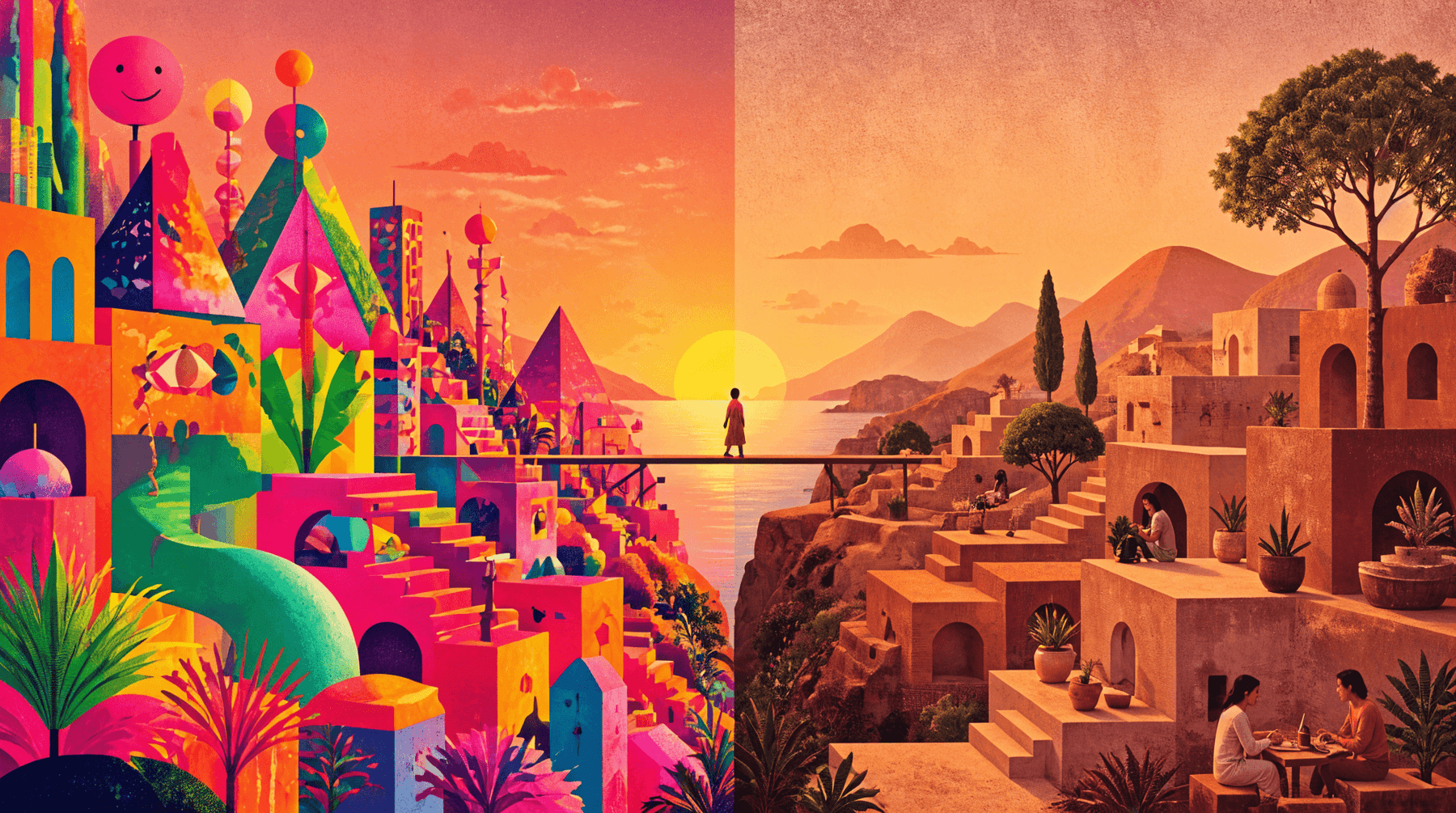
BrandQuiet Confidence or Dopamine Design? 2026 Trend Test
2026’s web trends split in two: neon dopamine design and quiet, grain-textured restraint. Which fits your brand depends on the decision your buyer is making
· 4 min read