Brand
Brand Consistency: The 10–20% Revenue Lever
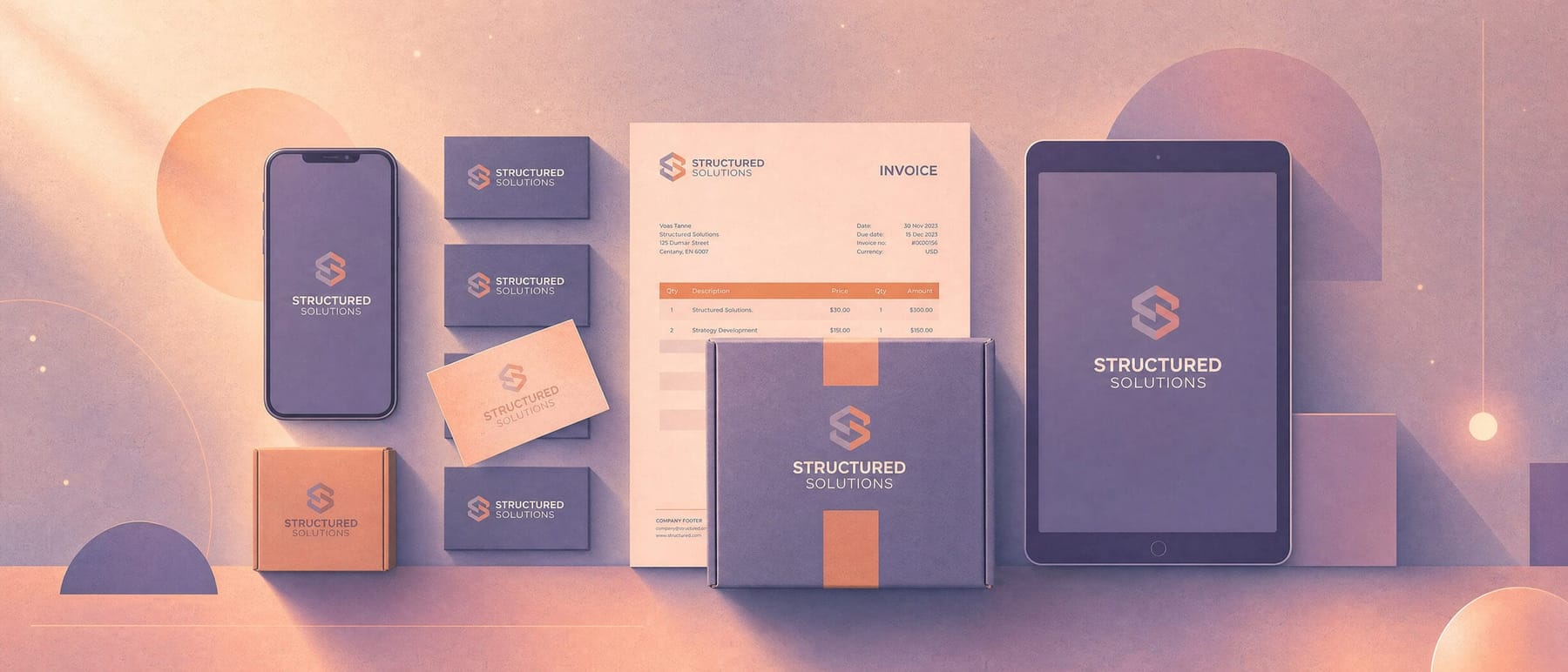
Brand consistency is the least glamorous term in marketing and the most profitable habit in it. Most small businesses leak trust at every touchpoint, and a 15-minute brand audit shows where.
MalbarDesign creates original, strategic logos for businesses that take their brand seriously.
Brand consistency is the least glamorous term in marketing and the most profitable habit in it. Industry surveys keep landing on the same uncomfortable number: roughly 68 % of companies credit consistent brand presentation with 10–20 % of their revenue growth. That growth comes from no new logo and no viral campaign, only the boring discipline of looking and sounding like the same company everywhere.
We believe the number, because we’ve watched its inverse destroy value up close. A prospective client once sent us their materials in one email. The website used a blue logo, the attached invoice used an older green one, the Instagram profile showed a third variant someone had stretched, and the email signature linked to a domain that redirected. Four touchpoints, four different companies, and they were wondering why customers kept asking “are you guys still in business?”
Nobody decided to look untrustworthy. Inconsistency is never a decision; it accumulates. That is exactly why it’s fixable in an afternoon once you can see it, and this article gives you the 15-minute audit to see it.
The Brand That Looked Different on Every Channel
The ending of that story is the point, so here it is. The company was a regional B2B service firm with solid work and decent reviews. It wasn’t losing customers to better competitors. It was losing them in the gaps between its own touchpoints.
A customer’s journey went like this: professional-looking quote (new blue logo) → visit to website (matches, good) → finds them on Instagram while waiting for a callback (stretched green logo, last post 14 months old) → receives invoice (old green logo, different font, different address format). Each step planted one small seed of doubt. None was fatal. Together, they whispered: nobody’s steering this ship.
In B2B especially, customers are buying your service and also forecasting what you’ll be like to deal with. A brand that can’t synchronize its own logo is making an unintentional promise about its project management.
We didn’t redesign anything. We spent one afternoon enforcing what already existed. Six months later, their close rate on quotes had measurably improved with the same services, the same prices and the same logo. The difference was that it was finally the same logo everywhere.
What Brand Consistency Really Means (Beyond the Logo)
Brand consistency gets reduced to “use the right logo file,” which is like reducing fitness to “own running shoes.” The real definition spans four layers.
Visual consistency covers logo versions, exact color values, typography and image style. It is the layer everyone thinks of, and the easiest to audit.
Verbal consistency covers your one-line positioning, tone of voice and how you describe services. If your website says “brand identity studio” and your proposal says “marketing solutions provider,” you’re two companies sharing a bank account.
Experiential consistency asks whether the premium feel of your website survives contact with your invoice template, your proposal documents and your email signature. Brands are judged at their weakest touchpoint rather than their best one, and the weakest is usually something operational nobody considers “design.”
Temporal consistency means the same brand, sustained over years. This one earns the compound interest: recognition. Every unnecessary visual reinvention resets the meter to zero, which is the hidden tax we described in why rebrands fail.
A quick word on how this differs from a style guide, since the two are related but not the same: a brand style guide is the rulebook. Brand consistency is whether anyone plays by it. We’ve audited companies with beautiful 40-page guidelines and chaotic touchpoints. The document existed; the discipline didn’t.
The Numbers: Why Brand Consistency Pays
Beyond the headline 68 % / 10–20 % revenue statistic, the mechanism is worth understanding, because it explains why the boring discipline outperforms exciting campaigns.
Recognition compounds. Marketing’s old rule of thumb says a prospect needs multiple exposures before a brand registers. Consistent presentation means every exposure deposits into the same memory account. Inconsistent presentation opens a new account each time, so you pay for seven impressions and bank two.
Trust transfers. When your Instagram matches your invoice, the credibility earned in one channel flows to the others for free. When they don’t match, each channel has to earn trust alone, from zero.
Decisions accelerate. Familiar-feeling brands get shorter evaluation cycles. In practice this shows up exactly where our client saw it: quote-to-close rates.
Machines are now grading you too. AI assistants recommending services cross-reference your brand information across the web, and to them inconsistency reads as unreliability just as it does to humans. (That shift is big enough that we wrote about it separately in Branding for AI Search.)
The 15-Minute Brand Consistency Audit
Block fifteen minutes and open a blank document. Collect screenshots of these ten touchpoints side by side. The side-by-side part is the trick, because each one looks fine alone:
- Website homepage (desktop)
- Website on your phone
- Google Business Profile
- Most recent Instagram/Facebook post
- LinkedIn profile (company and the founder’s personal one)
- Email signature: yours and one employee’s
- Latest invoice or quote PDF
- Latest proposal or presentation
- Business card (photograph it)
- The most recent thing anyone printed: flyer, packaging, vehicle, workwear
Now score each touchpoint pass/fail on five checks:
- Logo: correct current version, correct clear space, not stretched or recolored?
- Color: exact brand values, or “approximately our blue”?
- Type: brand fonts, or whatever the tool defaulted to?
- Voice: would the one-line description of your company match across touchpoints?
- Currency: is the information actually up to date?
Under 40 points of 50, you’re leaking trust. Under 30, the leak is costing you inquiries right now. If the audit also stirred a suspicion that the identity itself is the problem rather than its enforcement, check these signs you’ve outgrown your brand before fixing symptoms.
The Three Most Common Consistency Leaks (and Fixes)
After dozens of these audits, we find that three leaks account for most of the damage.
Leak #1: File chaos. Old logo versions live forever, in a supplier’s archive, an employee’s desktop, a print shop’s “we used what you sent in 2022.” Fix: one cloud folder named BRAND (USE ONLY THIS), containing current files in every needed format and linked in your email footer where even suppliers can find it. Delete every other copy you control.
Leak #2: The operational documents nobody designed. Invoices, quotes, contracts and email signatures are produced by accounting software defaults instead of your identity. They are also, and this is worth reading twice, the documents your paying customers see most often. Fix: one afternoon templating them properly. It is the highest-ROI design work that exists, and nobody believes us until they see the close-rate difference.
Leak #3: No single source of truth. Five people create things, each with their own memory of the rules. Fix: a one-page brand sheet with logo files linked, exact color codes, two fonts, three tone rules and one sentence of positioning. A 40-page manual nobody opens loses to one page everybody uses. (If you need the full rulebook too, here’s what belongs in it, but ship the one-pager first.)
The Unfashionable Conclusion
Brand consistency gets no launch party, no reveal, no applause and no portfolio piece. What it gets is a quiet compounding effect: customers stop asking if you’re still in business and start assuming you’re the safe choice, which in most B2B buying decisions is the whole game.
It is a 10–20 % revenue lever that costs one honest afternoon. The price was never the catch. The catch is that someone has to actually do the audit.
Want a second pair of eyes on yours? Send us your ten screenshots through the inquiry form and we’ll tell you where the leaks are, and whether they need a designer or just a decision.
FAQ
Q: What is brand consistency?
Presenting the same visual identity, voice and core message across every touchpoint (website, social media, email, documents, print), so the brand is instantly recognizable and trustworthy everywhere a customer meets it.
Q: Does brand consistency really increase revenue?
Industry surveys repeatedly link consistent brand presentation to 10–20 % revenue growth, with around 68 % of companies reporting the effect. The mechanism is compounding recognition, transferred trust between channels, and faster purchase decisions.
Q: How do I audit my brand consistency?
Collect screenshots of your ten most-used touchpoints side by side, then score each on five checks: correct logo version, exact brand colors, brand typography, consistent voice, and up-to-date information. Side-by-side comparison reveals what individual checks miss.
Q: What causes inconsistent branding?
Old logo files circulating among suppliers and employees, operational documents (invoices, signatures) generated by software defaults instead of brand templates, and the absence of a single one-page source of truth for everyone who creates anything.
Q: What is the fastest fix for inconsistent branding?
A one-page brand sheet (current logo files, exact color codes, two fonts, three tone rules and one positioning sentence) distributed to every person and supplier who produces anything, plus deleting every outdated logo file you control.
Not sure whether your brand needs a refresh or a rebuild?
Ask for the free 5-point brand check: concrete recommendations for your logo and website within 48 hours, no sales call unless you want one.
Related articles
All articles Brand
BrandHow to Launch a Rebrand Without Losing Your Customers
The files are delivered, and now comes the part that decides everything: the switch. The 215-asset inventory, the bridge period, the inside-out sequence, and the 30-day scoreboard.
· 4 min read
 Brand
BrandThe DIY Brand Audit: Score Your Brand in One Afternoon
Before spending a euro on design, spend an afternoon on diagnosis. The exact 5-test brand audit we run professionally, simplified for coffee, honesty, and one stranger.
· 4 min read
 Brand
BrandFrom Startup Brand to Company Brand: Rebranding After Traction
The scrappy identity that won your first hundred customers is costing you the next thousand. When to rebrand a startup, what actually changes, and the founder’s playbook.
· 4 min read