Brand
How to Name a Business (That Humans & AI Both Find)
Learning how to name a business in 2026 means satisfying two audiences at once: the humans who remember it and the machines that decide whether you’re found.
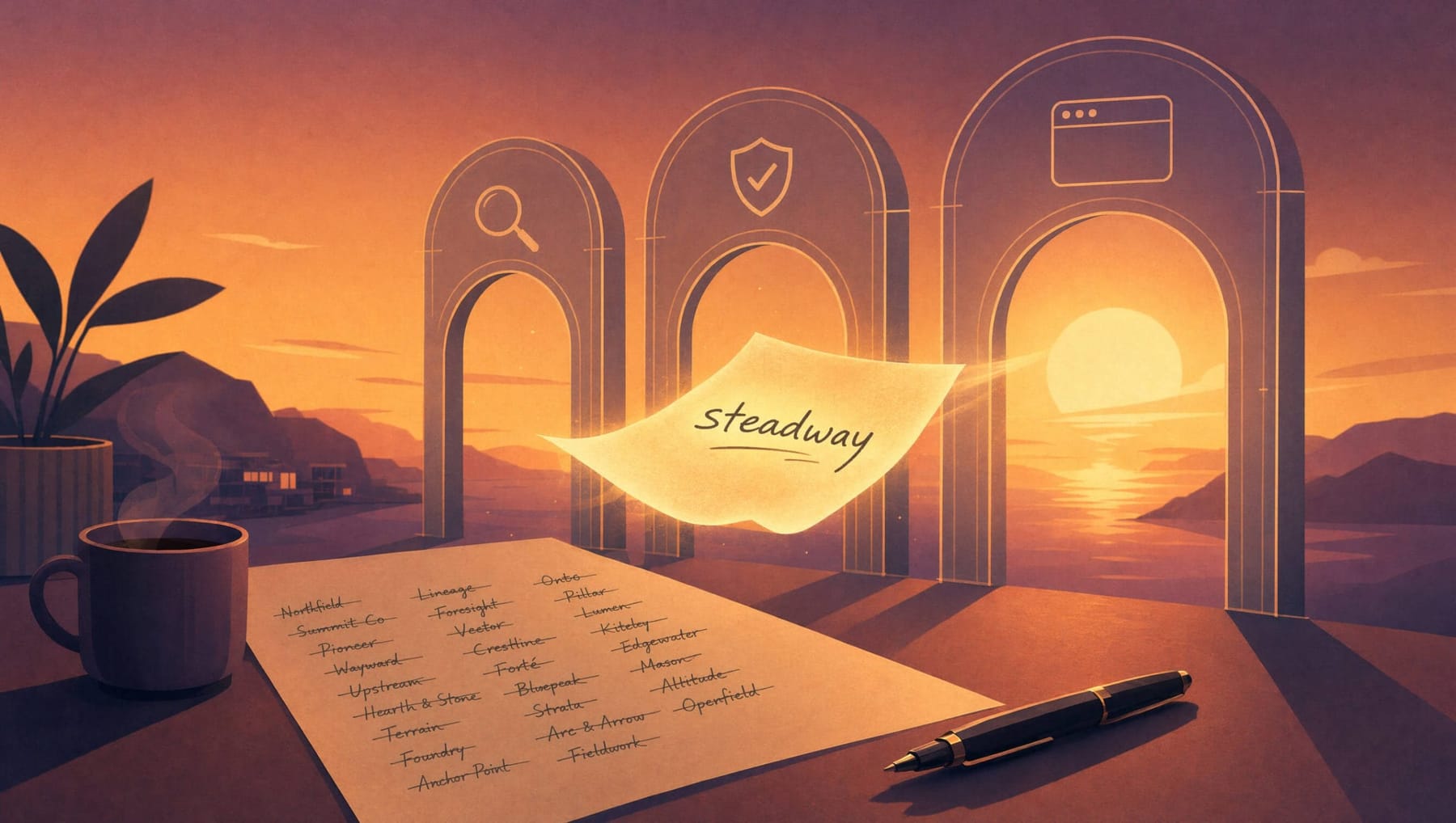
Most companies are named the way most companies are named: in an evening, by a founder and two friends, fuelled by enthusiasm and whatever wine was open. A few candidates get scribbled down, the “.com” is checked, the first one that’s available wins, and everyone goes to bed pleased. Eighteen months later, the same founder is quietly wondering why the business feels like a slightly cheaper version of a better idea.
You don’t stick a name on a finished company like a label. As the naming specialists at Inkbot Design put it, it is the first piece of intellectual property you will ever defend and the most frequent touchpoint a customer will ever encounter. Getting it wrong costs more than looks; it becomes a slow financial drain. And in 2026 the stakes have quietly risen, because a name now has to satisfy two audiences at once: the humans who have to remember it, and the machines that increasingly decide whether anyone finds it at all.
This is how to do it properly.
Start with a brief, not a brainstorm
Naming feels like flailing because most people skip straight to generating words before they’ve decided what the word has to do. Before any brainstorming, write a short naming brief: who the brand is for, how it’s positioned, what personality it should project, and the category it competes in. Several naming guides, including a founder’s naming checklist from 2026, call this single page the most valuable document in the whole process. It works as a filter that ends the endless “but I prefer this one” debates by giving everyone an agreed standard to judge against.
A name chosen against a brief is a strategic decision. A name chosen against a gut feeling is a coin toss you’ll be paying for later.
Choose a name with room to grow and room to mean something
Two opposite failures haunt naming. The first is the name that’s too descriptive. “Boston Book Delivery” tells customers exactly what you do today and traps you the moment you want to do anything else. The most durable names are what naming professionals call “empty vessels”: distinctive words ready to be filled with meaning over time. Google, Kodak and Xerox meant nothing until the companies poured meaning into them.
The second failure is the name that means nothing and sounds like nothing: generic, forgettable, indistinguishable from three competitors. The craft lives in the middle. You want a name distinctive enough to own and suggestive enough to resonate, with the flexibility to survive your own success. The classic techniques still work: invented words (Spotify, Venmo), blended words (Pinterest), and meaningful roots, the way Verizon was built from the Latin veritas and horizon, as NameStormers notes.
The 2026 twist: your name has to be legible to machines
This part is genuinely new. Naming used to end at “is the dot-com free?” Now it has to clear two further hurdles that barely existed a few years ago.
The first is distinctiveness for AI search. When someone asks an assistant “who’s the best graphic design studio?”, the model answers by synthesising what it has indexed about each brand. A generic name like “Fast Design” dissolves into a thousand similar entities; a distinctive name creates what Inkbot Design calls a unique “cluster” the algorithm can actually identify. Naming for Generative Engine Optimisation, meaning a name that can hold its own Knowledge-Graph entry, is now part of the job. As the team at Memorable Design frames it, a 2026 name has to be short, phonetically clear for voice assistants, and distinct enough to claim a digital footprint.
The second is legal headroom. Trademark registries are crowded to the point that, by Inkbot’s estimate, registration of four- and five-letter dictionary words is nearly saturated in major economies. Counter-intuitively, a slightly longer, more invented name often lowers your legal risk and is easier for search engines to attribute to you alone.
The practical sequence: shortlist names against the brief, then run each survivor through a domain check, a social-handle check across the platforms you’ll actually use, and a preliminary trademark search. Do all of this before you fall in love with any of them.
Don’t forget the name has to be *worn*
A name doesn’t live in a vacuum. It lives on an app icon, a business card, a social header and, eventually, a logo. A sprawling name makes for a messy mark. Part of judging a name is imagining it designed: can it be carried by a compact symbol or a single letter? Does it read cleanly small? The verbal and visual identity are decided together, which is exactly why we keep naming and design in the same conversation instead of handing them between strangers.
One last piece of permission, because perfectionism stalls more launches than bad names ever did. You cannot know on day one whether a name will stick, and plenty of now-iconic names sounded faintly ridiculous at launch. Give yourself a deadline, choose the strongest candidate against your brief, and go build the brand that will make the name mean something. The name matters, but it earns its meaning from the company behind it.
There’s real money in getting this right. McKinsey’s research on design-led companies, those that build on a coherent brand strategy from the name up, found they achieve markedly stronger revenue growth than their peers, a figure Inkbot cites at 32%. A name is the cheapest strategic asset you’ll ever create and the most expensive one to change later.
If you’re at the naming stage and want it done as a craft rather than a coin toss, with a name that is distinctive, defensible and ready for an AI-mediated market, start a branding project with MalbarDesign. Once the name is settled, the next decision is how it should sound everywhere it speaks: here’s how to define your brand voice.
FAQ
Q: How do I name a business?
Start with a one-page naming brief (audience, positioning, personality, category), then generate candidates against it using techniques like invented words, blends and meaningful roots. Shortlist, then validate each survivor with a domain check, social-handle check and a preliminary trademark search before deciding.
Q: Should a business name describe what the company does?
Usually not too literally. Highly descriptive names (“Boston Book Delivery”) box you in when the business evolves. The most durable names are distinctive “empty vessels” you fill with meaning over time, like Google or Spotify, that stay flexible as you grow.
Q: Does my business name affect SEO and AI search?
Yes, more than it used to. A generic name gets aggregated with similar businesses by search engines and AI assistants, while a distinctive name creates a unique entity that algorithms can identify and recommend. Naming for Generative Engine Optimisation, which means choosing a distinct, voice-friendly name, is now part of the process.
Q: Do I need a .com domain in 2026?
A matching .com still carries the most credibility and recall, but it’s no longer the only path. If it’s taken, modern options include descriptor domains (Get[Name].com) or newer extensions like .app or .studio. Whatever you choose, secure matching social handles at the same time.
Q: How long should a brand name be?
Shorter is generally better: roughly one to three syllables. Short names are easier to remember, fit cleanly on digital assets and logos, and are less likely to be mangled by voice assistants. The exception is when a slightly longer, invented name is what makes you distinctive and trademarkable.
Sources
- Inkbot Design, Brand Naming: How to Name a Company in 7 Steps
- Memorable Design, How to Name a Brand in 2026
- NameStormers, A Step-by-Step Guide to Brand Naming
- PrometAI, Founder Checklist: Naming & Branding a New Business
- NameRobot, Essential Tips for Naming a Business in 2026
FAQ
Questions people ask
How do I name a business?
Start with a one-page naming brief covering audience, positioning, personality and category, then generate candidates against it using techniques like invented words, blends and meaningful roots. Shortlist, then validate each survivor with a domain check, social-handle check and a preliminary trademark search before deciding.
Should a business name describe what the company does?
Usually not too literally. Highly descriptive names box you in when the business evolves. The most durable names are distinctive empty vessels you fill with meaning over time, like Google or Spotify, that stay flexible as you grow.
Does my business name affect SEO and AI search?
Yes. A generic name gets aggregated with similar businesses by search engines and AI assistants, while a distinctive name creates a unique entity that algorithms can identify and recommend. Naming for Generative Engine Optimisation (a distinct, voice-friendly name) is now part of the process.
Do I need a .com domain in 2026?
A matching .com still carries the most credibility and recall, but it's no longer the only path. If it's taken, options include descriptor domains like Get[Name].com or newer extensions such as .app or .studio. Secure matching social handles at the same time.
How long should a brand name be?
Shorter is generally better: roughly one to three syllables. Short names are easier to remember, fit cleanly on logos and digital assets, and are less likely to be mangled by voice assistants. The exception is when a slightly longer invented name is what makes you distinctive and trademarkable.
Not sure whether your brand needs a refresh or a rebuild?
Ask for the free 5-point brand check: concrete recommendations for your logo and website within 48 hours, no sales call unless you want one.
Related articles
All articles Brand
BrandHow to Launch a Rebrand Without Losing Your Customers
The files are delivered, and now comes the part that decides everything: the switch. The 215-asset inventory, the bridge period, the inside-out sequence, and the 30-day scoreboard.
· 4 min read
 Brand
BrandThe DIY Brand Audit: Score Your Brand in One Afternoon
Before spending a euro on design, spend an afternoon on diagnosis. The exact 5-test brand audit we run professionally, simplified for coffee, honesty, and one stranger.
· 4 min read
 Brand
BrandFrom Startup Brand to Company Brand: Rebranding After Traction
The scrappy identity that won your first hundred customers is costing you the next thousand. When to rebrand a startup, what actually changes, and the founder’s playbook.
· 4 min read