Brand
Interactive Branding: When Your Logo Talks Back
QR, NFC and AR are turning static brand touchpoints into doorways. Here’s what interactive branding can do, and the honest line between depth and gimmick.
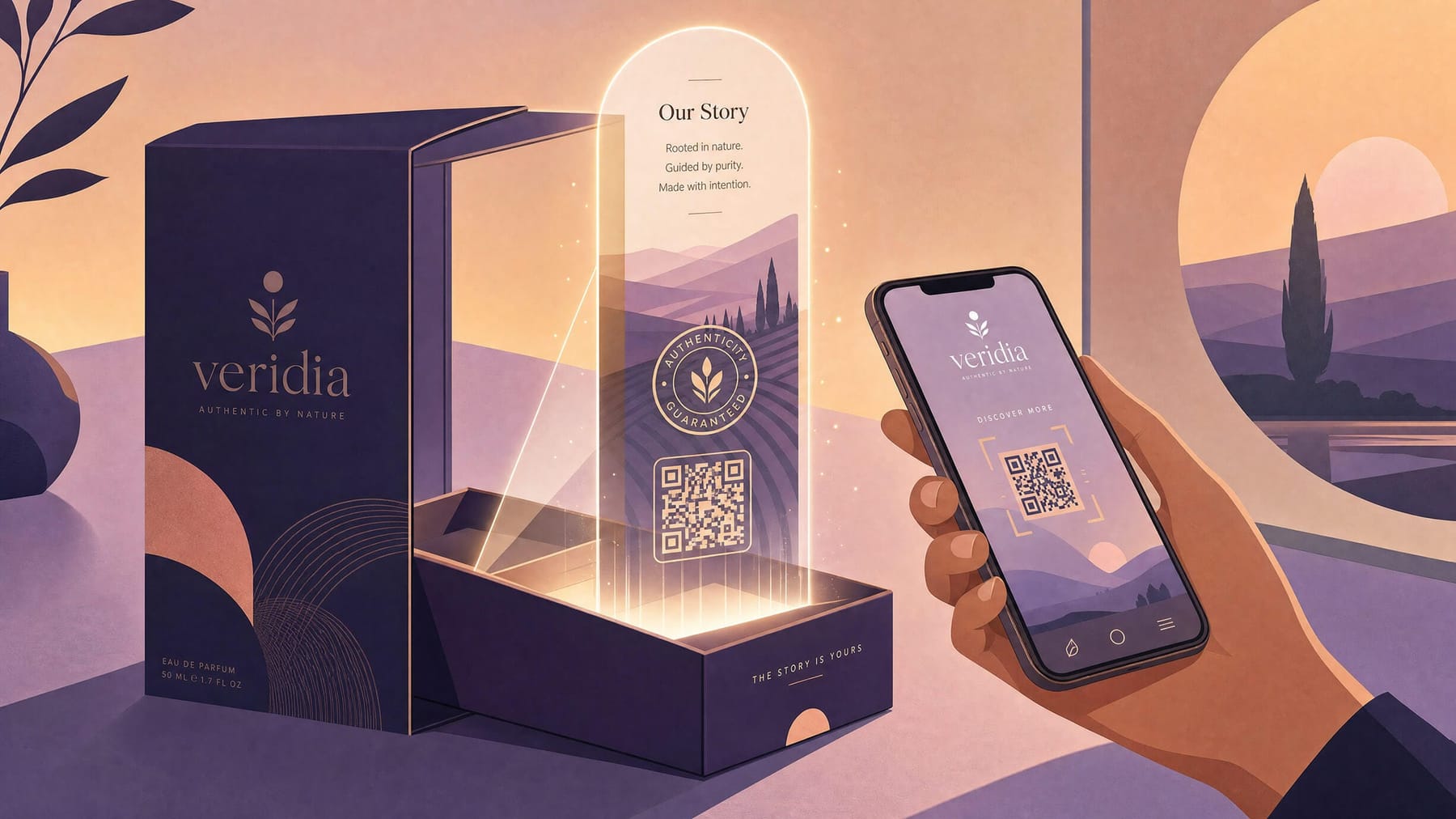
Interactive branding is what happens when a brand stops being something you only look at and becomes something you can open. A QR code on a wine label that pours out the vineyard’s story. An NFC tag in a sneaker that proves it’s real. An AR filter that drops a piece of furniture into your living room before you buy it. The physical touchpoint (package, print, product, poster) becomes a doorway into a digital layer, and the brand suddenly has somewhere deeper to take you. After years of logos being static marks on static surfaces, the surface itself is learning to respond.
As designers we find this genuinely exciting, and we also owe you the unglamorous part: most interactive branding being sold right now is a gimmick wearing the costume of innovation. A QR code that links to your homepage adds nothing. An AR experience nobody opens twice is a budget bonfire. The technology is real and powerful, while the discipline to use it well is rare. So this article separates the two: what interactive branding genuinely does when it works, and the honest line between depth and gimmick.
What “Interactive Branding” Actually Means
It’s the deliberate connection of a physical brand touchpoint to a digital experience, so the two feel like one continuous brand rather than two disconnected encounters. It’s sometimes called “phygital,” an ugly word for an elegant idea: the physical and digital halves of a brand stitched into a single moment.
The three main doorways in 2026:
- QR codes: now mainstream, mature and trusted post-pandemic. Cheap, universal, no app needed. The workhorse of the category, increasingly serving as a digital product passport on packaging that covers sourcing, authenticity, recycling and story.
- NFC: the tap instead of the scan. A chip in a product, tag or card that responds to a phone touch. It feels more premium and more seamless, and it’s brilliant for authentication and high-end unboxing, at a higher cost per unit.
- AR (augmented reality): the most spectacular and the most overspent. Drop a product into a room, animate a label, turn a poster into a portal. Magic when it solves a real problem; theatre when it doesn’t.
It’s worth seeing this as the physical-world cousin of kinetic logo design. There, the digital mark learns to move; here, the physical object learns to respond. Both reflect the same underlying shift: brands becoming systems that react rather than images that sit.
When Interactive Branding Genuinely Works
The honest test is simple: does the interaction solve a real problem or answer a real desire at that exact moment? When the answer is yes, it’s transformative.
When it removes friction. A QR on a restaurant table replacing a sticky laminated menu. A tap-to-reorder NFC tag on a coffee bag. An AR “see it in your room” that defuses the single biggest hesitation in buying furniture online. The interaction earns its place by making something easier right where the friction lives.
When it proves authenticity. For premium and luxury goods, an NFC tag confirming “this is genuine” is real value: anti-counterfeiting that doubles as a moment of brand reassurance. The customer wants this verification, so you’re answering a question they’re already asking.
When it deepens a story worth telling. A craft producer linking a bottle to the field it came from, or a maker showing the hands behind the product. This works because the story is genuinely good and the moment of holding the product is exactly when curiosity peaks. The interaction extends authenticity rather than manufacturing it, much like custom illustration signals something real that stock imagery can’t.
When it feeds the machines. The structured data behind a well-built QR passport increasingly informs how AI systems understand and recommend your brand. The doorway your customer taps is, quietly, also a doorway the machines read.
When It’s Just a Gimmick
The failures share a common root: technology added to a brand rather than for a customer.
The QR-to-homepage. The most common waste in the category. A code that dumps the scanner on your generic homepage respects nobody’s time and teaches people not to scan your codes again. If the destination isn’t more useful than where they already were, don’t make the code.
The one-and-done AR. Expensive, impressive in the pitch, opened once out of novelty and never again. AR that doesn’t solve an ongoing problem is a fireworks display: briefly dazzling, gone in seconds, costly per minute of attention.
The interaction nobody needs. Tapping, scanning and downloading are costs you ask of a customer. If the reward doesn’t clearly exceed that cost, you’ve made your brand more annoying instead of more engaging. Friction dressed as innovation is still friction.
The broken bridge. A beautiful package linking to a clunky, off-brand, slow-loading page breaks the spell at the worst moment, right when curiosity was highest. An interactive layer that isn’t held to the same standard as the rest of the brand actively damages it. Consistency doesn’t stop at the QR code.
How to Approach Interactive Branding
If you’re considering adding an interactive layer, the brief is about discipline more than technology:
- Start with the customer’s moment, not the tech. What does someone want or struggle with at the instant they hold your product? Design for that. The right technology is whatever serves it, and that may be none.
- Make the destination worth the tap. Whatever’s on the other side must be more useful, more delightful or more reassuring than not tapping. If it isn’t, kill it.
- Hold the digital layer to brand standard. The linked experience is part of your brand, not an afterthought. Give it the same quality, voice and polish as everything else.
- Design the physical cue well. A QR code can be elegant and on-brand rather than an ugly black square slapped on at the end. The invitation to interact is itself a design decision.
- Measure whether it’s used. Interactive branding is one of the few brand moves you can measure directly through scans, taps and repeat opens. If the numbers say nobody cares, you’ve learned something cheaply. Listen.
Done with discipline, interactive branding makes a brand feel alive, present in the physical world and ready to go deeper the moment someone’s curious. Done without discipline, it’s a tax on your customer’s patience and your own budget. The technology will keep getting cheaper and more capable. The scarce thing, as always, is the judgment to use it only where it genuinely serves. Make the doorway worth walking through, or don’t build the door.
If you’re thinking about connecting your physical brand to a digital experience and want it done with restraint rather than gimmickry, we can help.
Get in touch and we’ll design a doorway worth walking through.
FAQ
Questions people ask
What is interactive branding?
Interactive branding deliberately connects a physical brand touchpoint (packaging, print, product) to a digital experience via QR codes, NFC tags or AR, so the physical and digital halves feel like one continuous brand. It’s sometimes called “phygital” branding.
Are QR codes good for branding?
Yes, when the destination is worth the scan. QR codes are cheap, universal and trusted, ideal for product passports, stories and reordering. They fail when they simply link to a generic homepage, which adds no value and discourages future scanning.
What’s the difference between QR, NFC and AR in branding?
QR codes are scanned and need no app, which makes them the universal workhorse. NFC is tapped, feels more premium and excels at authentication. AR overlays digital content on the real world, spectacular for visualization but easily overspent on experiences nobody reopens.
When is interactive branding worth it?
When the interaction solves a real problem or answers a real desire at that moment, such as removing friction, proving authenticity, or deepening a genuinely good story. It’s a gimmick when technology is added for novelty rather than to serve a customer need.
Does interactive branding help with AI and search visibility?
It can. The structured data behind a well-built QR or NFC product passport is increasingly read by AI systems and search engines, helping them understand and recommend your brand. The doorway customers tap is also one machines read.
Not sure whether your brand needs a refresh or a rebuild?
Ask for the free 5-point brand check: concrete recommendations for your logo and website within 48 hours, no sales call unless you want one.
Related articles
All articles Brand
Does Your Brand Need a Mascot in 2026?
Mascots are staging a comeback, and the AI era is the reason. What Duolingo’s owl teaches, why characters cut through machine-made sameness, and the catch.
· 6 min read
 Brand
The Real Reason Rebrands Fail, and What to Do Instead
New logo. New colors. New website. The founder had spent months on it, invested real money, and launched with genuine excitement. Six months later, nothing had changed.
· 5 min read
 Web
Why Your Website Is Your Hardest-Working Salesperson
Your website works for you 24/7, or silently costs you clients. Discover the 5 non-negotiable foundations of effective web design in 2026.
· 4 min read