Brand
Kinetic Logo Design: Why Static Brands Die in 2026
Logos stopped being static. Kinetic logo design (motion, micro-interactions, adaptive marks) is reshaping branding in 2026. Here’s the honest guide.
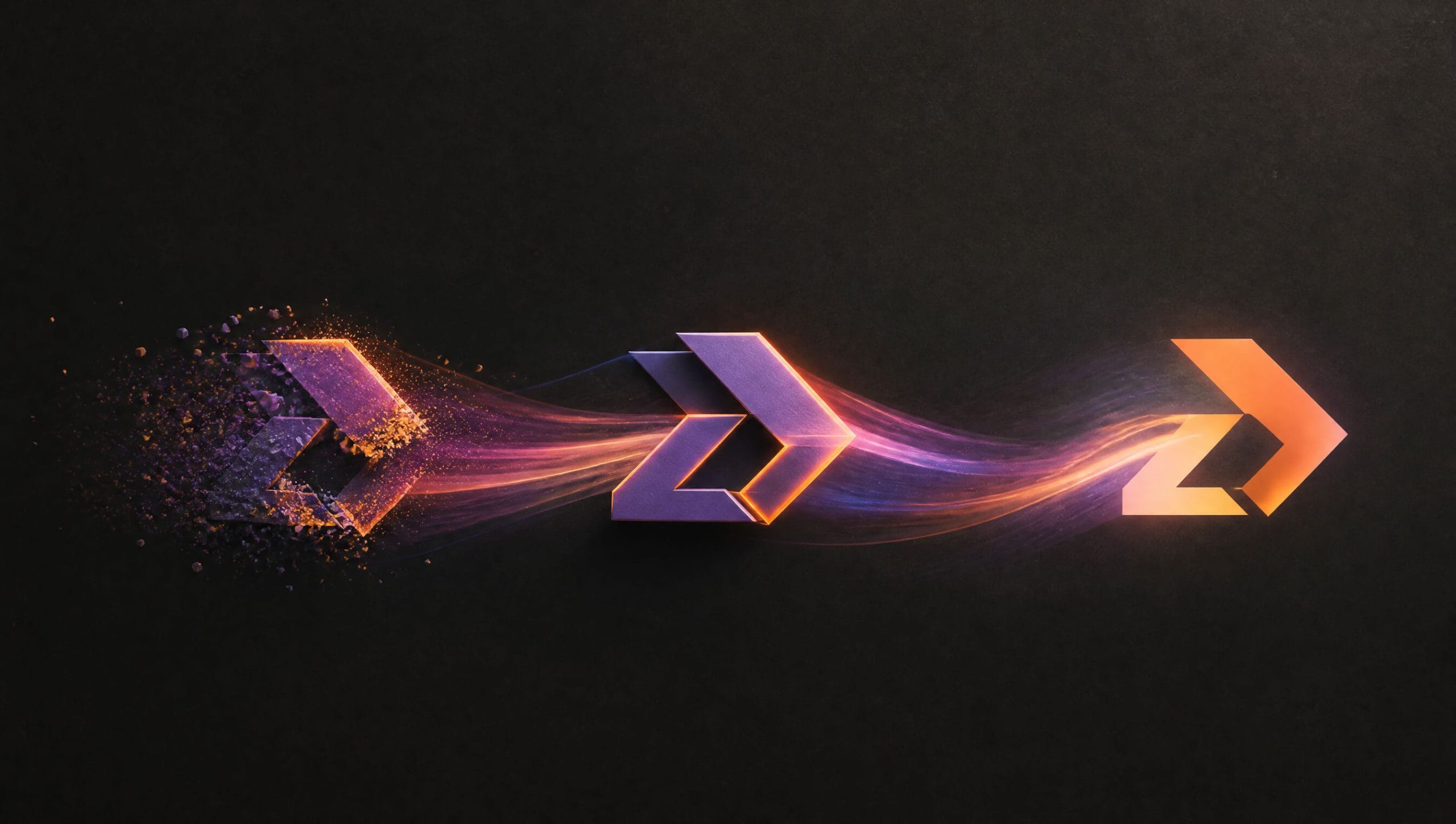
Kinetic logo design is what happens when a brand stops printing its identity and starts performing it. The logos winning attention in 2026 don’t sit still. They breathe on app launch, morph between contexts, react to scroll, and collapse gracefully into a favicon without losing their character. The average attention span online has shrunk to roughly 47 seconds, and motion is how brands buy back the first two of them.
We sell logos for a living, and we still think most businesses being pitched “motion branding” right now don’t need it. Some are being charged premium prices for what is essentially a logo sneezing in After Effects.
This guide covers what kinetic logo design actually is, the three levels it comes in, what each level costs, and the unfashionable question of whether your brand should skip the trend entirely.
What Kinetic Logo Design Is, and Why It Is Peaking Now
A kinetic logo is a mark designed as a system of states rather than a single frozen image. The static version still exists (print isn’t dead, and your customs stamp doesn’t support MP4), but it’s one state among several: an animated intro, a looping idle state, hover micro-interactions, an adaptive small-screen variant.
Three forces converged to make 2026 the peak year:
First, brands now live primarily in motion-native places. Apps, video, social feeds, AR filters. Trend reports from Envato and VistaPrint’s 99designs community both put kinetic and adaptive identities at the top of the 2026 list for the same reason: a static JPEG in a video feed is furniture.
Second, the tooling collapsed in price. Rigging, easing and rendering used to require a motion studio in 2020. Now it takes a designer with Lottie, Rive or Jitter and an afternoon. The craft still matters enormously; the rendering bill doesn’t.
Third, AI flooded the market with competent static logos, which agencies mention more quietly. When everyone’s mark is clean, geometric and fine, motion becomes the new layer of differentiation. Movement is hard to template, and timing and character are still stubbornly human. (It’s a cousin of the problem we wrote about in the AI logo problem nobody is talking about.)
The Three Levels of Kinetic Logo Design
Sales decks love to blur these together. Keep them apart: each level is a different product at a different price.
Level 1: Micro-motion (the animated logo)
Your existing mark gets one or two designed movements: a logo reveal for video intros, a subtle loop for the website header, an app-launch animation. The geometry doesn’t change; the mark just learns to enter a room.
Best for: any business producing video content or running a polished website. This is the level most small businesses actually need, and the one that delivers the most perceived quality per euro.
Level 2: Responsive marks
The logo is designed to restructure across sizes and contexts: full wordmark on desktop, monogram in the app, simplified glyph at favicon size, all visibly the same identity. Technically this isn’t even animation. It comes down to choosing the right logo construction so the system has somewhere to collapse to.
Best for: frankly, every brand built since smartphones existed. If your current logo can’t survive a 16-pixel square, you have a responsiveness problem wearing a kinetic costume.
Level 3: Fully adaptive living systems
The identity behaves like an organism: generative variations, motion rules instead of fixed compositions, marks that respond to data, sound or user input. Think broadcast idents, festival identities, or tech brands whose logo is effectively a small piece of software.
Best for: brands with real motion budgets, in-house teams, and channels where the identity is the product experience. Spectacular when justified. Theater when not.
What Kinetic Logos Cost (Honest Numbers)
European market, 2026, assuming a competent independent studio:
- Level 1, micro-motion: €300–800 on top of an existing logo. A reveal and a loop, exported as Lottie + MP4 + GIF. If someone quotes €3,000 for a fade-in, ask what else is in the box.
- Level 2, responsive system: usually not a separate line item but a property of good logo design, built into identity packages from roughly €1,500–5,000. If you’re paying for a new identity in 2026 and responsiveness isn’t included, that’s the red flag.
- Level 3, adaptive system: €5,000–25,000+, because you’re buying motion guidelines, tooling and engineering rather than a file. Scope discipline matters more than talent here.
One practical warning from client work: always contract the deliverable formats explicitly. Lottie/JSON for web and app, MP4/WebM for video, GIF as a fallback, plus the untouched static master set in vector formats you actually own. We’ve onboarded clients whose previous studio delivered a beautiful animation as a single flattened MP4, which became unusable the moment the website changed.
When Your Brand Doesn’t Need a Kinetic Logo
Trend reports tend to leave this section out.
Skip it if your brand lives mostly in print and physical space. Signage, packaging, vehicle livery, embroidered workwear: motion adds nothing where nothing moves. Spend the budget on better materials.
Skip it if your static logo is weak. Animating a flawed mark is upholstering a broken chair. Motion amplifies identity; it doesn’t repair it. Fix the foundation first. If you’re unsure whether the foundation is the problem, these are the signs you’ve outgrown your brand.
Skip it if you can’t maintain it. A kinetic system needs someone who exports the right format for each channel and respects the motion rules. If your reality is one overworked marketing person and Canva, a single excellent Level 1 animation will serve you better than an adaptive system gathering dust.
And be suspicious of urgency. “Static brands die in 2026” makes a great headline (we used it), but Coca-Cola’s static script has outlived every trend that promised to kill it. Motion is a powerful layer and not a survival requirement. The brands that really die are the inconsistent ones, not the still ones.
How We Approach Kinetic Logo Design at MalbarDesign
Our rule is boring and effective: motion is designed at the same table as the mark, not bolted on after. When a logo is built with motion in mind, the geometry already contains its animation. The way it should assemble, breathe and collapse is implied by its construction. That’s also why retrofitting works well on clean marks and badly on cluttered ones.
For most clients the sweet spot is Level 1 + Level 2: a responsive mark with one signature movement, delivered in every format their channels need and documented on a single page so anyone can use it correctly. No theater and no rendering farm, just an identity that behaves like it was born this decade.
Want to know whether your current mark can move, or needs to be rebuilt before it can? Send it over, and we’ll tell you honestly which level your brand actually needs, including “none.”
FAQ
Q: What is kinetic logo design?
A logo designed as a system of motion states (animated reveals, loops, micro-interactions and adaptive variants that respond to context: web, app, video, AR) rather than a single static image. The static version remains one state within the system.
Q: Can my existing static logo be converted to a kinetic one?
Usually yes, if the geometry is clean and simple. Retrofitting motion onto a well-constructed mark costs far less than a redesign; cluttered or overly detailed logos typically need simplification first.
Q: How much does a kinetic logo cost?
Simple logo animation (reveal + loop) typically costs €300–800 on top of an existing mark.
Responsive logo systems are built into identity packages from roughly €1,500–5,000, while fully
adaptive living systems run €5,000–25,000+.
Q: Does my small business need an animated logo?
Only if your brand lives mainly in digital channels: video, apps, social. A strong static logo with one well-crafted animation covers about 90 % of real use cases for small businesses.
Q: What file formats do kinetic logos use?
Lottie/JSON or Rive for web and apps, MP4/WebM for video, GIF as a universal fallback, always alongside the static SVG/EPS/PDF master set you should own outright.
FAQ
Questions people ask
What is kinetic logo design?
A logo designed as a system of motion states (animated reveals, loops, micro-interactions and adaptive variants that respond to context) rather than a single static image.
How much does a kinetic logo cost?
Simple logo animation typically costs €300–800 on top of an existing mark. Responsive systems are built into identity packages from roughly €1,500–5,000; fully adaptive systems run €5,000–25,000+.
Does my small business need an animated logo?
Only if your brand lives mainly in digital channels. A strong static logo with one well-crafted animation covers about 90 % of real use cases for small businesses.
What file formats do kinetic logos use?
Lottie/JSON or Rive for web and apps, MP4/WebM for video, GIF as fallback, alongside the static SVG/EPS/PDF master set you should own outright.
Can my existing static logo be converted to a kinetic one?
Usually yes, if the geometry is clean. Retrofitting motion onto a well-constructed mark costs far less than a redesign; cluttered logos typically need simplification first.
Not sure whether your brand needs a refresh or a rebuild?
Ask for the free 5-point brand check: concrete recommendations for your logo and website within 48 hours, no sales call unless you want one.
Related articles
All articles Brand
BrandQuiet Confidence or Dopamine Design? 2026 Trend Test
2026’s web trends split in two: neon dopamine design and quiet, grain-textured restraint. Which fits your brand depends on the decision your buyer is making
· 5 min read
 Brand
BrandHow to Launch a Rebrand Without Losing Your Customers
The files are delivered, and now comes the part that decides everything: the switch. The 215-asset inventory, the bridge period, the inside-out sequence, and the 30-day scoreboard.
· 4 min read
 Brand
BrandWhy 2 Logo Directions Beat 10 Concepts, Every Time
“How many concepts do I get?” is the most revealing question in logo design. Why high concept counts signal uncertainty, and what a decision-led process looks like
· 4 min read