Brand
Brand Maximalism vs Minimalism
After a decade of clean, quiet minimalism, brand maximalism is storming the shelf: loud, layered, chaotic. Here’s which side actually fits your brand.
MalbarDesign creates original, functional webs for businesses that take their business seriously.
The maximalism vs minimalism branding debate exploded in 2026, and it arrived the way most rebellions do: suddenly, loudly and aimed squarely at whatever came before it. For a decade, minimalism reigned almost totally. Brands became nearly indistinguishable as a result: the same thin sans-serif wordmark, the same oceans of white space, the same tasteful restraint sanded down until a tech startup, a skincare line and a bank all looked alike.
It was elegant, and it was also exhausting. So 2026 became the year the pendulum swung hard the other way. Clashing colors, layered collage, hand-drawn chaos and loud type now storm the shelf. The numbers confirm it: searches for bold fonts have surged and collage aesthetics are climbing fast, according to Envato’s trend tracking.
The instinct here is to ask which side is “right.” That framing is a trap, and falling into it is exactly how brands chase a trend straight into the same anonymity they wanted to escape. What matters is which style tells your brand’s truth, rather than which one wins. Below we lay out what’s happening, why it’s happening now, and how to choose the side that fits.
What Maximalism Branding Actually Means
Maximalism, sometimes called “chaos packaging” or, in its militant form, anti-design, is the deliberate embrace of more. More color, more layers, more texture, more personality. Everything arrives arranged in what looks like disorder, yet done well, it stays carefully controlled.
It borrows openly from the anti-design movement of the 1990s, when rules existed to be broken and “too much” was precisely the point.
Composed Chaos vs Simple Mess
Maximalism is still different from being messy, and the distinction matters enormously. Good maximalism is composed chaos. Clashing colors and overlapping elements hold together through underlying discipline, the way a crowded jazz arrangement is still arranged.
Bad maximalism is just noise. The difference between the two is exactly the skill a real designer brings. Without it, “maximalist” becomes a generous word for a mess.
Why the Rebellion Started, and Why Now
Three forces converged to crack minimalism’s reign.
First, Sameness Fatigue
When every brand minimizes, minimalism stops differentiating. A design language that makes everyone look premium eventually makes everyone look identical. Invisibility is fatal on a crowded shelf, so maximalism became a healthy bid to get noticed again.
Second, the AI Counter-Movement
As AI floods the world with competent but soulless visuals, the hunger for the visibly human has grown. Hand-drawn marks, visible texture and the warmth of imperfection now feel valuable. Maximalism’s collage energy reads as unmistakably made by a person, the same instinct driving brands toward custom illustration over stock imagery. Mess became proof of life.
Third, Cultural Mood
After years heavy with crisis, people clearly crave joy, vibrancy and permission to be loud again. Design commentators have noted this appetite across the year’s trend reports.
But Minimalism Branding Isn’t Dead
The obituary is premature, and that deserves an asterisk. Minimalism didn’t die. It evolved.
The sterile, clinical version is fading, yes. In its place, neo-minimalism has risen. It keeps the same clarity and restraint and adds warmth, texture, depth and tactile sophistication instead of cold empty space.
Quiet Luxury Gets Louder
Meanwhile, the calmest voices in the room are growing louder by staying quiet. Pantone’s 2026 Color of the Year is the soft off-white Cloud Dancer, an explicit statement of quiet luxury.
So the real picture of 2026 is a genuine split rather than a maximalist victory. A loud, joyful maximalist surge holds one flank, while a warmer, more tactile minimalism holds the other. Both are thriving, and each is right for different brands.
Maximalism vs Minimalism Branding: Choosing the Side That Fits You
Only one question matters here, and the answer has nothing to do with what’s trending. It has everything to do with who you are.
When Maximalism Fits
Maximalism fits you if your brand is genuinely bold, playful, youthful or culturally loud. It also fits if you fight for attention in a crowded, noisy category, or if your audience rewards personality over polish.
On a reserved brand, though, maximalism reads as a costume, and audiences smell a costume instantly. It works best for food, beauty, entertainment and lifestyle brands whose truth is exuberance.
When Minimalism Fits
Minimalism, or neo-minimalism, fits you if your brand’s value rests on trust, precision, calm or premium restraint. It suits you if your audience equates clarity with competence, or if you’re the steady choice in a frantic category.
As we’ve argued about industrial and B2B branding, restraint often reads as confidence. The brand that doesn’t need to shout looks like it has nothing to prove.
The One Fatal Mistake
The fatal error is choosing the style first and forcing your brand to fit it. Style expresses brand truth; it cannot stand in for having one. A maximalist coat of paint won’t make a cautious company exciting. It will just make it look confused, and confusion is the one thing no aesthetic can sell.
How to Decide Without Chasing the Trend
Name your brand’s actual personality first
Pick three honest adjectives. Loud or composed? Playful or serious? The style follows from the answer, never the reverse.
Look at your category
If everyone’s minimal, controlled maximalism can hand you the room’s attention. If everyone’s shouting, calm confidence cuts through the noise. Either way, differentiation beats conformity.
Be honest about execution
Maximalism done badly is far worse than minimalism done plainly, because it needs more skill, not less. If the craft isn’t there, restraint is the safer bet.
Protect consistency whichever you choose
A brand that lurches between loud and quiet has no identity at all. Coherence over time is what turns a style into recognition: the engine of brand consistency.
Minimalism isn’t dying so much as making room. The monoculture is breaking, and that’s healthy. The brands that win this moment won’t be the loudest or the cleanest. They’ll be the ones whose style, loud or quiet, is the honest outward shape of who they actually are. Pick your truth first. The aesthetic is just how you say it out loud.
Not sure whether your brand should shout or stay composed in 2026? Get in touch. The right answer is the one that fits who you actually are, and that’s where every identity we design begins.
FAQ
Q: What is brand maximalism?
Brand maximalism is a design approach that deliberately embraces more (more color, layers, texture and personality) arranged as controlled chaos. Sometimes called “chaos packaging” or anti-design, it’s a reaction against a decade of restrained minimalism, aimed at standing out on crowded shelves.
Q: Is minimalism dead in branding?
No, it’s evolving rather than dying. The sterile, clinical version is fading, but neo-minimalism has risen in its place: the same clarity and restraint warmed with texture and tactile depth. Pantone’s 2026 off-white Color of the Year shows quiet luxury is still very much alive.
Q: Should my brand be maximalist or minimalist?
It depends on your brand’s actual personality, not the trend. Maximalism fits bold, playful, attention-seeking brands; minimalism and neo-minimalism fit brands built on trust, precision and calm. Choosing the style before knowing your brand’s truth is the common, costly mistake.
Q: Why is maximalism trending in 2026?
Three forces: fatigue with minimalist sameness that made brands look identical, a counter-movement against soulless AI-generated visuals favoring visibly human craft, and a cultural appetite for joy and boldness after heavy years. Search data shows surging demand for bold fonts and collage aesthetics.
Q: Is maximalist design just being messy?
No. Good maximalism is composed chaos: clashing elements held together by underlying discipline, like an arranged piece of jazz. Bad maximalism is genuine noise. The difference is the skill a real designer brings; without it, “maximalist” is just a mess.
Sources
- Envato Author Hub, Graphic Design Trends 2026 (chaos packaging, bold fonts +65,7 %): https://author.envato.com/hub/graphic-design-trends-2026/
- It’s Nice That, Graphic trends 2026: https://www.itsnicethat.com/features/forward-thinking-graphic-trends-2026-graphic-design-120126
- Adobe Express, Color of the Year 2026 (Cloud Dancer, quiet luxury): https://www.adobe.com/express/learn/blog/color-of-year-trends
FAQ
Questions people ask
What is brand maximalism?
A design approach that deliberately embraces more (color, layers, texture, personality) arranged as controlled chaos. Sometimes called chaos packaging or anti-design, it reacts against a decade of restrained minimalism to stand out.
Is minimalism dead in branding?
No, it's evolving. The sterile version is fading, but neo-minimalism has risen: the same clarity warmed with texture and tactile depth. Pantone's 2026 off-white Color of the Year shows quiet luxury is alive.
Should my brand be maximalist or minimalist?
It depends on your brand's actual personality, not the trend. Maximalism fits bold, playful brands; minimalism fits brands built on trust, precision and calm. Choosing style before knowing your brand's truth is the costly mistake.
Why is maximalism trending in 2026?
Fatigue with minimalist sameness, a counter-movement against soulless AI visuals favoring human craft, and a cultural appetite for joy after heavy years. Search data shows surging demand for bold fonts and collage aesthetics.
Is maximalist design just being messy?
No. Good maximalism is composed chaos: clashing elements held by underlying discipline, like arranged jazz. Bad maximalism is noise. The difference is the skill a real designer brings.
Not sure whether your brand needs a refresh or a rebuild?
Ask for the free 5-point brand check: concrete recommendations for your logo and website within 48 hours, no sales call unless you want one.
Related articles
All articles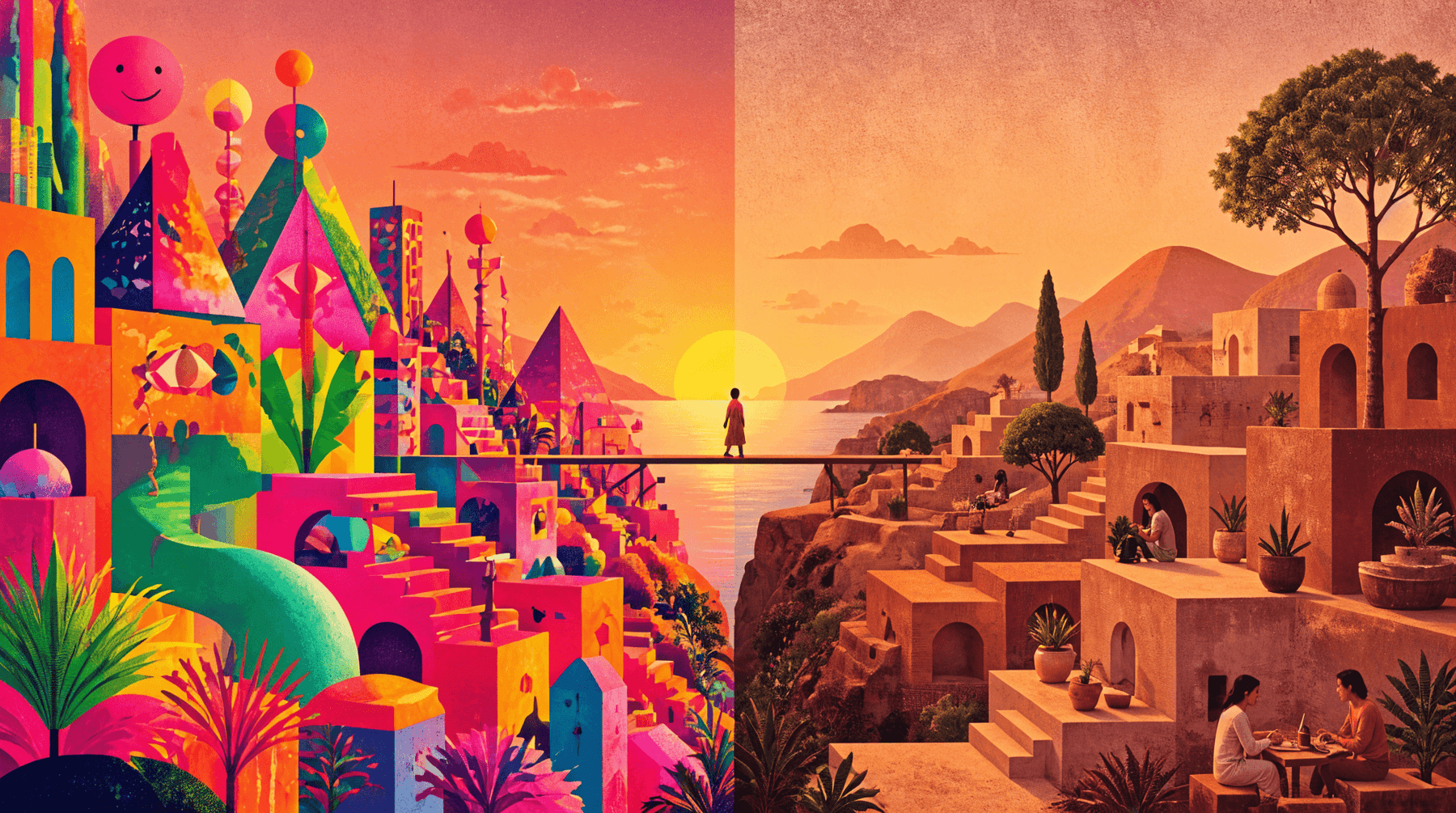 Brand
BrandQuiet Confidence or Dopamine Design? 2026 Trend Test
2026’s web trends split in two: neon dopamine design and quiet, grain-textured restraint. Which fits your brand depends on the decision your buyer is making
· 5 min read
 Brand
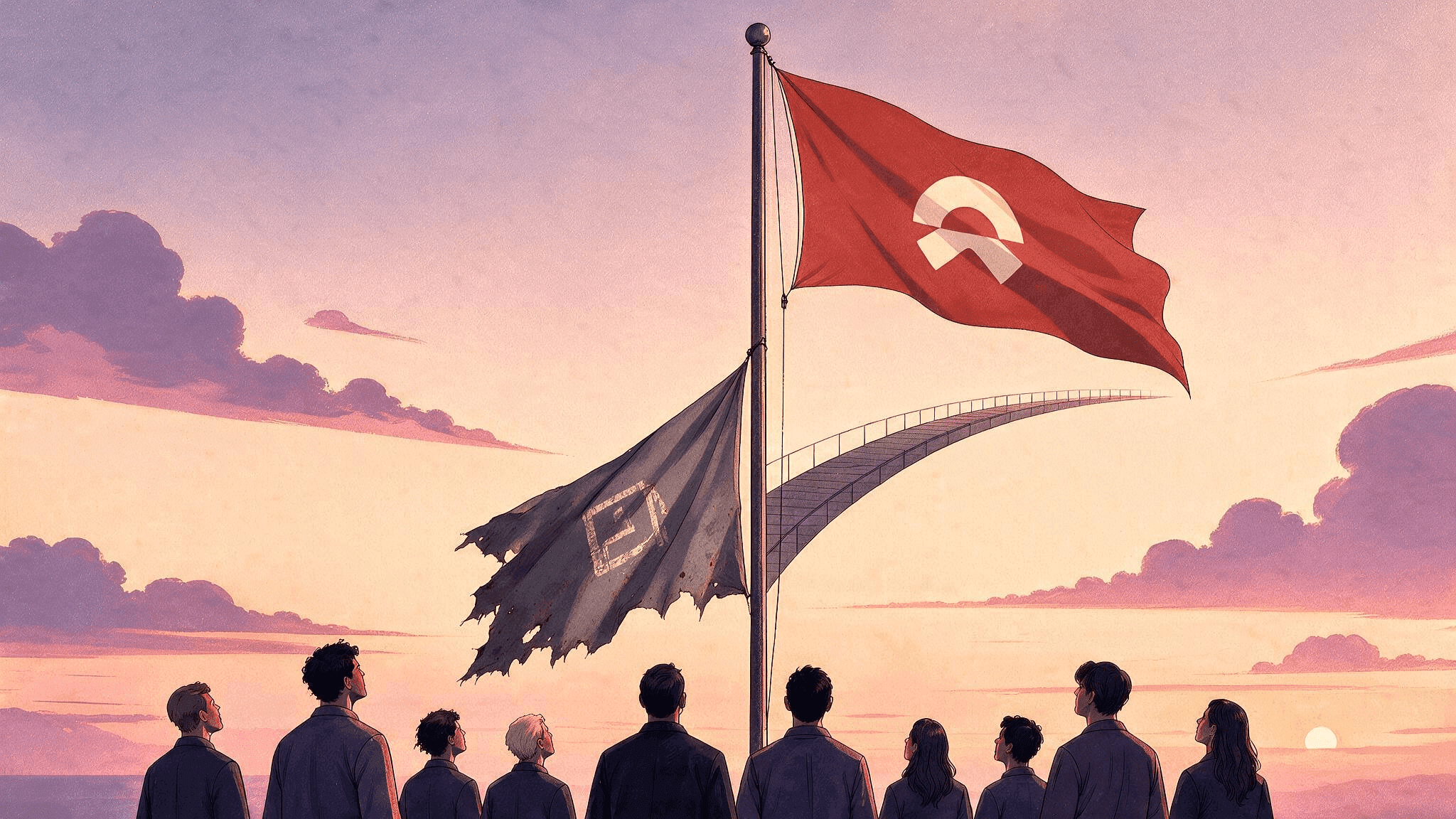
BrandHow to Launch a Rebrand Without Losing Your Customers
The files are delivered, and now comes the part that decides everything: the switch. The 215-asset inventory, the bridge period, the inside-out sequence, and the 30-day scoreboard.
· 4 min read
 Brand
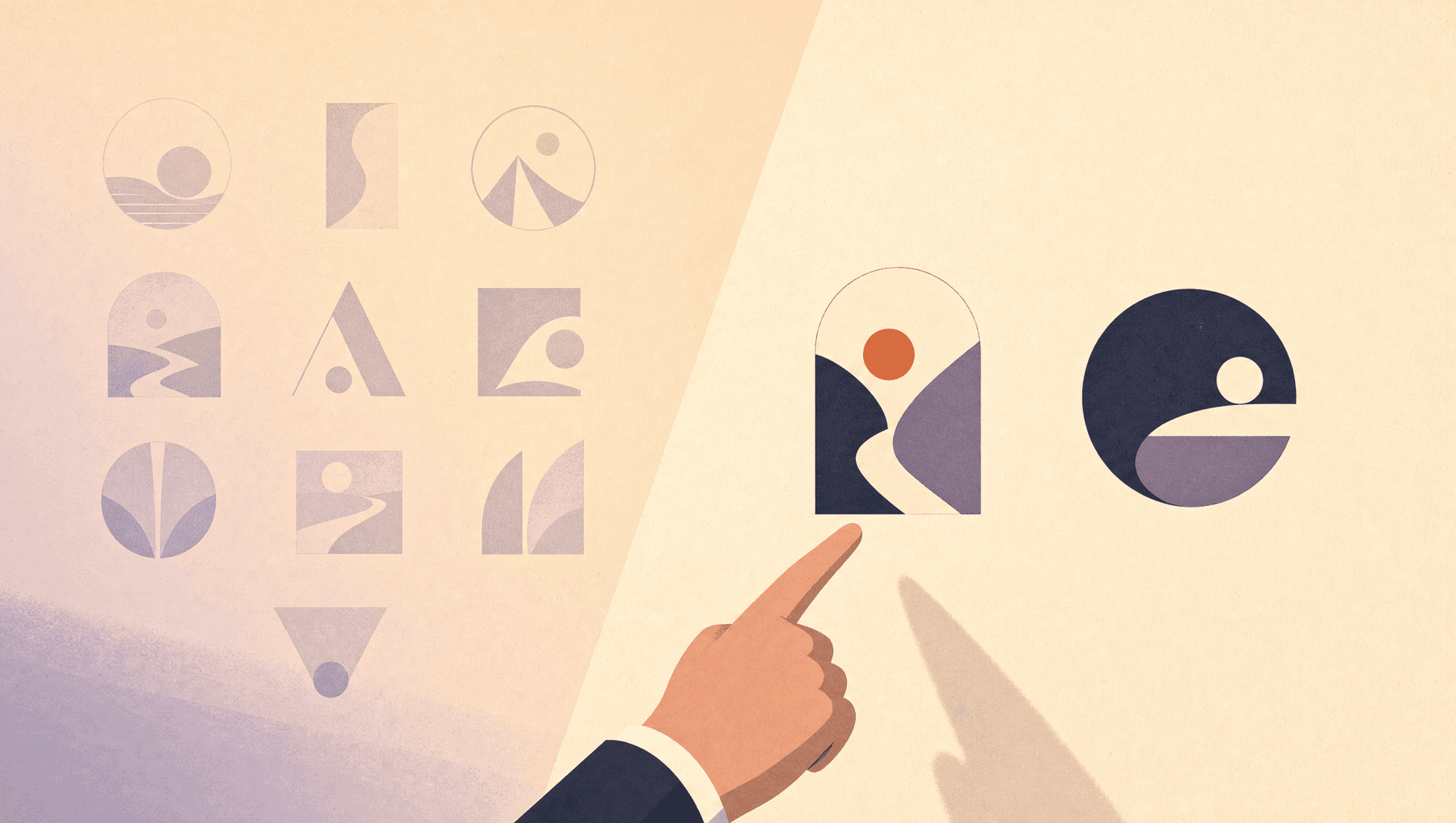
BrandWhy 2 Logo Directions Beat 10 Concepts, Every Time
“How many concepts do I get?” is the most revealing question in logo design. Why high concept counts signal uncertainty, and what a decision-led process looks like
· 4 min read