Brand
“Just a Logo” Is the Wrong Ask: Here’s the Right One
Nobody wanted a .ai file. They wanted to stop wincing at their own business card. Why “just a logo” is the wrong ask, and the right one.
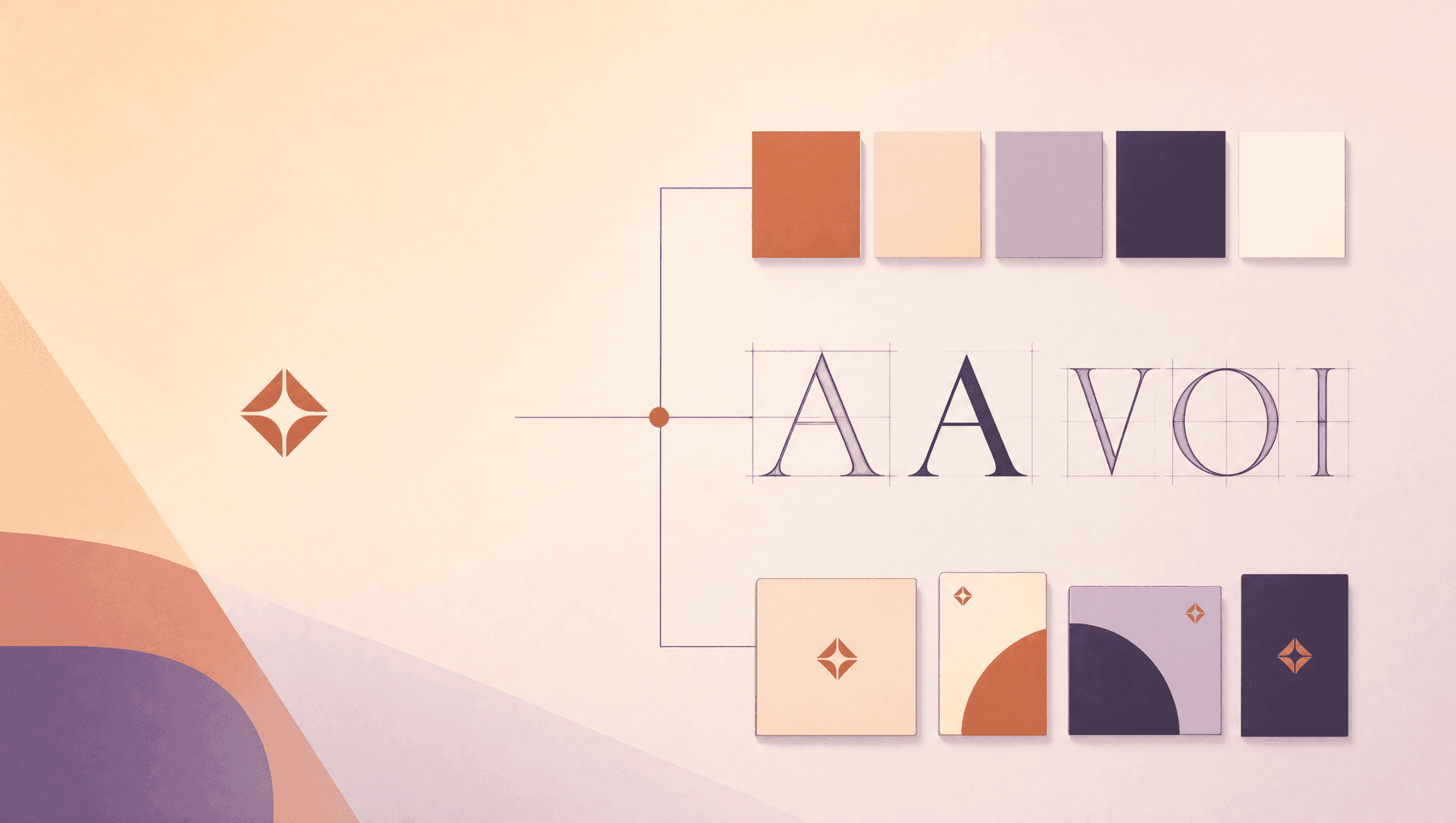
Nobody has ever actually wanted a .ai file. They wanted to stop wincing when they hand over a business card. “Just a logo” names the file and never the problem, and asking for the file is precisely how a business ends up with a symbol and nothing that holds it together.
“Just a logo” requests a deliverable rather than an outcome. What a growing business needs is a usable system: mark, palette, typography and rules for how they behave. A logo alone leaves roughly 90% of the brand experience undefined. 65% of first impressions trace to the logo, yet fewer than 10% of B2B companies report fully consistent branding. Most “just a logo” projects win the first glance and lose every glance after it.
What “just a logo” actually buys you
One file. A mark that looks fine on a card and quietly falls apart the first time it has to become a favicon, a van livery, a social avatar, an invoice or the header of a proposal, because nobody defined how it behaves off the single canvas it was drawn on. The person who asked for “just a logo” usually meets the gap six months later, improvising a palette in Canva and a font nobody chose, and rebuilding inconsistency into the brand one asset at a time.
Why people ask for it anyway
They rarely want a small project. “Logo” is simply the only word most non-designers have for “make my company look legitimate,” so it works as a stand-in request. The real job is bigger: make strangers trust us quickly, make our materials look like one company, stop looking smaller than we are. One file solves none of that, and all of it is what the client actually meant.
The ask that matches the problem
The answer is a system. The mark, yes, but also a palette with defined neutrals (more than just “the brand colours”), typography for display and for body text, logo behaviour rules (clear space, minimum size, what never to do), and a handful of core applications so everyday materials don’t need a designer each time. This is the line between “logo design” and brand identity, and it’s why studios that take this seriously have stopped selling the smaller version by default. Brands with consistent visual identity see roughly 33% higher recall and clearly positioned companies report about 23% higher profitability. A business that only ever bought the icon has no access to those numbers.
The honest exception
A logo-only project is genuinely cheaper and faster, and for a true one-person venture with no other materials yet, it can be the correct first move. Once a business already has a website, a social presence, proposals or packaging, though, a logo-only budget doesn’t save the cost. It moves the cost to later, paid piecemeal and at a worse exchange rate than building the system once.
If “just a logo” is what you’d type into a search bar but the business behind it is bigger than that, closing that gap is exactly what our Brand Identity work does. You can also start with a free 5-point brand check.
How this differs from our related posts (no overlap): this article is about scope, logo versus system. For what a professional actually adds over an AI generator, see Why Your Brand Needs a Real Logo Designer and Your Startup Logo Cost $20…. For what the full process looks like, see Inside the Design Room. For what a guide contains, see What Goes Inside a Brand Style Guide. This post links to those rather than repeating them.
FAQ
Q: Why shouldn’t I just ask for a logo?
Because a logo alone is one file with no rules for how it behaves elsewhere: website, avatar, proposal, signage. Without a defined palette, typography and usage rules, a business rebuilds inconsistency asset by asset, eroding the recognition a good logo first earned.
Q: What should I ask for instead of “just a logo”?
A brand identity system: the mark, a full palette with neutrals, typography for display and body text, logo usage rules, and a set of core applications assembled into a short guide the business can actually hand to a printer or a new hire.
Q: Is a logo-only project ever the right call?
Yes, for a genuine early-stage venture with no other materials yet. Once a business has a website, sales materials or a social presence, a full identity system is usually cheaper overall than solving inconsistency piecemeal later.
Q: Does brand consistency really affect results?
Yes. Consistent visual identity is associated with roughly 33% higher brand recall, and clearly positioned companies report about 23% higher profitability. Neither is achievable from a logo file alone.
Q: What’s the difference between a logo and a brand identity?
A logo is a mark. A brand identity is the system that mark belongs to (palette, typography, application rules), which is what makes a business look consistent and credible across every material it produces.
Sources
- Marketing LTB: Branding Statistics 2026: https://marketingltb.com/blog/statistics/branding-statistics/
- TechRT: Branding Statistics 2026: https://techrt.com/branding-statistics/
FAQ
Questions people ask
Why shouldn't I just ask for a logo?
A logo alone is one file with no rules for how it behaves elsewhere. Without a defined palette, typography and usage rules, a business rebuilds inconsistency asset by asset.
What should I ask for instead of just a logo?
A brand identity system: the mark, a full palette with neutrals, typography for display and body text, logo usage rules, and core applications assembled into a short guide.
Is a logo-only project ever the right call?
Yes, for a genuine early-stage venture with no other materials yet. Once a business has a website or sales materials, a full identity system is usually cheaper overall.
Does brand consistency really affect results?
Yes. Consistent visual identity is associated with roughly 33% higher recall, and clearly positioned companies report about 23% higher profitability.
What's the difference between a logo and a brand identity?
A logo is a mark. A brand identity is the system it belongs to (palette, typography and application rules), which makes a business look consistent everywhere.
Not sure whether your brand needs a refresh or a rebuild?
Ask for the free 5-point brand check: concrete recommendations for your logo and website within 48 hours, no sales call unless you want one.
Related articles
All articles Brand
BrandHow to Launch a Rebrand Without Losing Your Customers
The files are delivered, and now comes the part that decides everything: the switch. The 215-asset inventory, the bridge period, the inside-out sequence, and the 30-day scoreboard.
· 4 min read
 Brand
BrandThe DIY Brand Audit: Score Your Brand in One Afternoon
Before spending a euro on design, spend an afternoon on diagnosis. The exact 5-test brand audit we run professionally, simplified for coffee, honesty, and one stranger.
· 4 min read
 Brand
BrandFrom Startup Brand to Company Brand: Rebranding After Traction
The scrappy identity that won your first hundred customers is costing you the next thousand. When to rebrand a startup, what actually changes, and the founder’s playbook.
· 4 min read