Logo
Logo Licence Explained: Own vs Rent and What to Ask For
Paying a designer does not automatically make you the owner of your logo. Here is what a logo licence covers, how UK, US and Czech law differ, and the terms to ask for in writing.
A logo licence is the written permission that sets out how you may use the logo you paid for, and it matters because payment alone does not always make you the owner. Depending on your country and your contract, you may own the copyright, hold an exclusive licence, or have only limited rights to use the artwork.
We design logos from the Czech Republic for clients in the UK, the US, the EU and Australia, so we see all three situations. This article explains the difference between owning and renting a logo, and lists what to ask for before you pay. It is general information, not legal advice.
Why paying for a logo does not automatically mean you own it
Copyright starts with the person who creates the work. In the UK, the first legal owner of a commissioned work is the creator, not the commissioner, unless you agree otherwise in writing, as GOV.UK explains.
If the contract says nothing, a court may find an implied permission to use the work for its original purpose. That does not necessarily transfer ownership, and the commissioner may only get a limited non-exclusive licence. A limited, non-exclusive right is the weakest position a business can be in with its own logo.
The US works the same way in principle. Under 17 U.S.C. § 204, a transfer of copyright ownership is not valid unless it is in writing and signed by the owner of the rights conveyed. A handshake, an invoice marked paid or an email saying "it's yours" may not meet that test.
Assignment, licence, work for hire: the terms in plain English
Contracts use a handful of terms that sound similar and have different effects. This table sets them side by side.
| Term | What it means | What it gives you |
|---|---|---|
| Assignment | Ownership of the copyright moves to you, in a signed document | Full control, including the right to license others |
| Exclusive licence | Only you may use the logo, and the designer may not grant the same rights to anyone else | Close to ownership in daily use |
| Non-exclusive licence | You may use the logo, and the designer may license it to others too | Not suitable for a logo, which must be unique to you |
| Work made for hire | A US statutory status that makes the commissioner the author | Rarely available for logos |
| Implied licence | Limited permission inferred by a court when the contract is silent | Narrow and uncertain |
The work made for hire label is the one most often misunderstood. The US Copyright Office states that a commissioned work counts as made for hire only if it meets four criteria, including falling within one of nine listed categories. Law firm commentary notes that logos and graphic designs fall outside those categories (Fasthoff Law Firm). Writing "work made for hire" into a logo contract may therefore achieve nothing, and a signed assignment is the safer wording.
How a logo licence works under Czech law
Our studio is in the Czech Republic, and Czech law takes a different route from the UK or the US. According to the Czech Copyright Act, economic rights may not be waived by the author, and they are not transferable.
In practice, a Czech author cannot hand over copyright the way a UK or US designer can. As an academic questionnaire for the international copyright association ALAI puts it, rights remain with the author, and third parties exercise them under a licence (ALAI).
This is why the licence wording matters so much. The licence can be exclusive or non-exclusive, and an exclusive licence must be concluded in written form, according to MKA Nosko. A broad, exclusive, unlimited licence is the Czech equivalent of owning the logo outright.
Moral rights also stay with the author. These include the right to be named as the author and the right to the integrity of the work (EOSC CZ). A good contract addresses them directly, for example by agreeing that you may adapt the logo as your brand evolves.
Which country's law applies depends on the contract, so look for the governing-law clause before you sign.
What to ask for in a logo licence
Whether your designer works under an assignment or a licence, these terms decide how much of the logo you really control.
- Exclusive. The designer must not grant the same logo or the same rights to anyone else.
- Unlimited in time. A logo is used for years. A licence that expires, or that can be withdrawn, leaves you exposed.
- Worldwide. Clients in one country often expand into another, and a territory limit becomes a problem later.
- All media. Print, web, signage, packaging, vehicles, video and merchandise, including formats that do not exist yet.
- Right to modify. You must be allowed to adjust colours, proportions and lockups, and to commission a refresh from someone else.
- Right to sublicense. Printers, agencies, developers and subsidiaries all need to reproduce the logo on your behalf.
- Transferable with the business. If you sell the company or merge it, the logo must travel with it.
- Effective on payment, in writing, signed. The date the rights start and the signatures are what you rely on in a dispute.
Two more items sit outside the licence itself. Ask for the original vector files, because a logo you cannot edit is of limited use, and our guide to logo file formats explains which file does what. Ask also whether fonts, stock elements or AI-generated material were used, because those carry their own licence terms and may not be transferable.
Red flags that mean you are renting
Some wording shows that you are getting less than you think. Watch for these in a proposal or contract:
- The designer keeps ownership "until final payment" and no date is given for when rights pass to you.
- The licence is limited to a named product, campaign or country.
- Modifications require the designer's permission.
- The agreement is silent on who owns the work, which leaves you with an implied licence at best.
- The vector source files are held back or sold separately.
- Usage rights are described as "personal" or "non-commercial".
We go through the wider set of checks in our guide to logo design contract clauses. If a designer will not put the licence terms in writing, treat that as an answer.
Licence, authorship and trade mark are three different things
A licence settles who may use the artwork. It does not prove who created it, and it does not register your brand.
Proof of authorship is a separate question, and we cover it in Can You Prove Who Made Your Logo?. Trade mark registration is also separate. Our article on logo trade mark registration explains why an unregistered logo has limited protection however clean your licence is. For a business that is serious about its brand, all three should be in order.
What a properly licensed logo costs with us
Our logo prices are fixed and final, because we are not a VAT payer. Logo Start is €310 with 2 concepts and 2 revision rounds. The standard Logo is €430 and includes 4 concepts, up to 4 revision rounds, vector files in SVG, AI, EPS and CDR plus JPG and PNG, and 12 months of free edits. Logo Refresh, for an existing logo, is €175 with 1 concept.
Logo projects are paid 100 % upfront, so the time to read the licence wording is before payment. Ask us for it like you would ask any designer. Delivery is within 5 business days, and if none of the first logo concepts works for you, we refund in full within 5 business days. You can see the full range on the pricing page and the logo design service page.
Check your own logo before you build on it
If you already have a logo, find the contract or the email thread in which you commissioned it. Look for a signed sentence about ownership or licence. If you cannot find one, you probably hold an implied licence, and it is worth fixing that before you print signage, register a trade mark or sell the business.
Our free 5-point brand check is a quick starting point. Send us your logo and website through the contact page, and you receive a one-page PDF within 48 hours on business days, with no sales call.
FAQ
Questions people ask
Do I own my logo once I have paid the designer?
Not automatically. In the UK and the US, the designer is usually the first owner, and you need a signed written transfer or a clear licence to use the logo with confidence.
What is the difference between a logo licence and a copyright assignment?
An assignment moves ownership to you. A licence gives you permission to use the logo on agreed terms while ownership stays with the designer. Czech law only allows licences, so an exclusive, unlimited licence is the practical equivalent there.
Is a work made for hire clause enough for a logo in the US?
Usually not. Commissioned work qualifies only if it falls into one of nine statutory categories, and a standalone logo is generally not among them, so a signed assignment is the safer route.
What should a logo licence include?
It should be exclusive, unlimited in time and territory, cover all media, allow modification, allow sublicensing to suppliers, and transfer with your business if you sell it.
Does a logo licence replace trade mark registration?
No. A licence settles who may use the artwork. Trade mark registration is a separate step that protects the logo as a brand identifier.
Need a logo that holds up in print, on screen and in ten years?
Fixed prices, 4 concepts, vector files and a money-back guarantee on the first concepts.
Related articles
All articles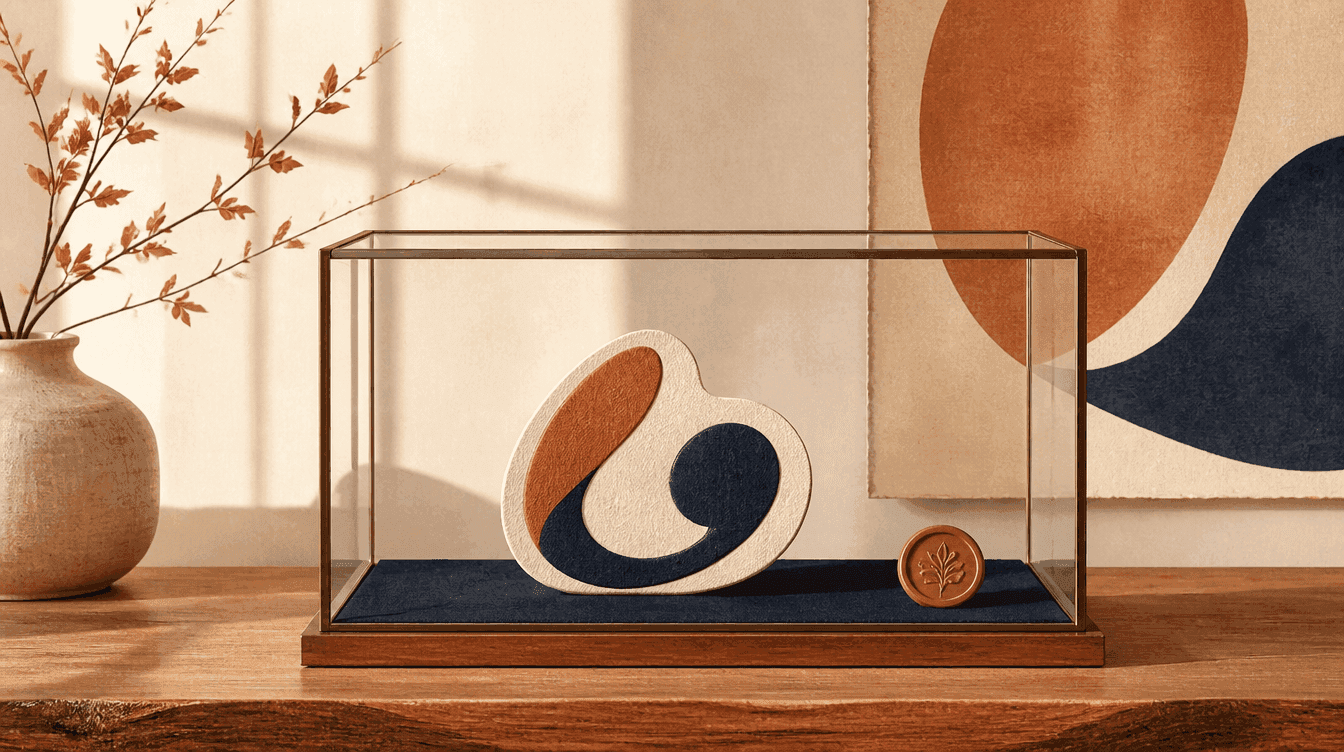 Logo & Identity
Your Logo Is Not Protected Until You Register It
A logo from a designer is not a registered trade mark. What registration costs in the Czech Republic and the EU, what it protects, and how to decide.
· 6 min read
 Logo
Logo Design Contract: 9 Clauses to Check Before You Pay a Designer
A logo design contract should say who owns the logo, what you receive, how many revisions are included and what happens if the work misses. Here are the 9 clauses to check before you pay.
· 7 min read
 Brand
Why Every Logo Looks the Same in 2026 (And How to Fix It)
Ten company logos, described from memory, and most people can’t tell them apart. Blandification has a name now, and the industry is finally reacting against it.
· 4 min read