Logo
Why the World’s Logos Are Suddenly Going Blurry
Logos are going blurry, fluid and “low on ink” on purpose. The melting-wordmark trend explained: what it signals, and the brands it’s wrong for.
MalbarDesign creates original, functional webs for businesses that take their business seriously.
Blurry logos are having a moment. If you’ve had a vague sense that brand marks have started to soften, smudge and dissolve at the edges, you aren’t imagining it. For years the gold standard was the crisp, permanent, monk-perfect wordmark, with every curve resolved and every edge gilded. Now designers have begun pulling in the opposite direction. Marks are going blotchy, fluid, variable; type is rendered as if the printer were running low on ink, letters dissolving mid-word as the colour runs out. As the design observers at It’s Nice That have documented across 2026, this is a genuine and accelerating shift away from permanence toward something deliberately unstable. The world’s logos are going soft on purpose, and it’s worth understanding why before deciding whether yours should follow.
We say the same thing to every client tempted by a hot trend: a logo is the most permanent, most demanding element of a brand, and the worst possible place to chase a fashion you don’t understand. So we’ll take it apart here: what “blurry” actually means, what it signals, which brands it suits brilliantly and which it costs dearly.
What “Blurry” Actually Means
There is no single trend here. It is a small family of related moves, united by a rejection of hard-edged perfection.
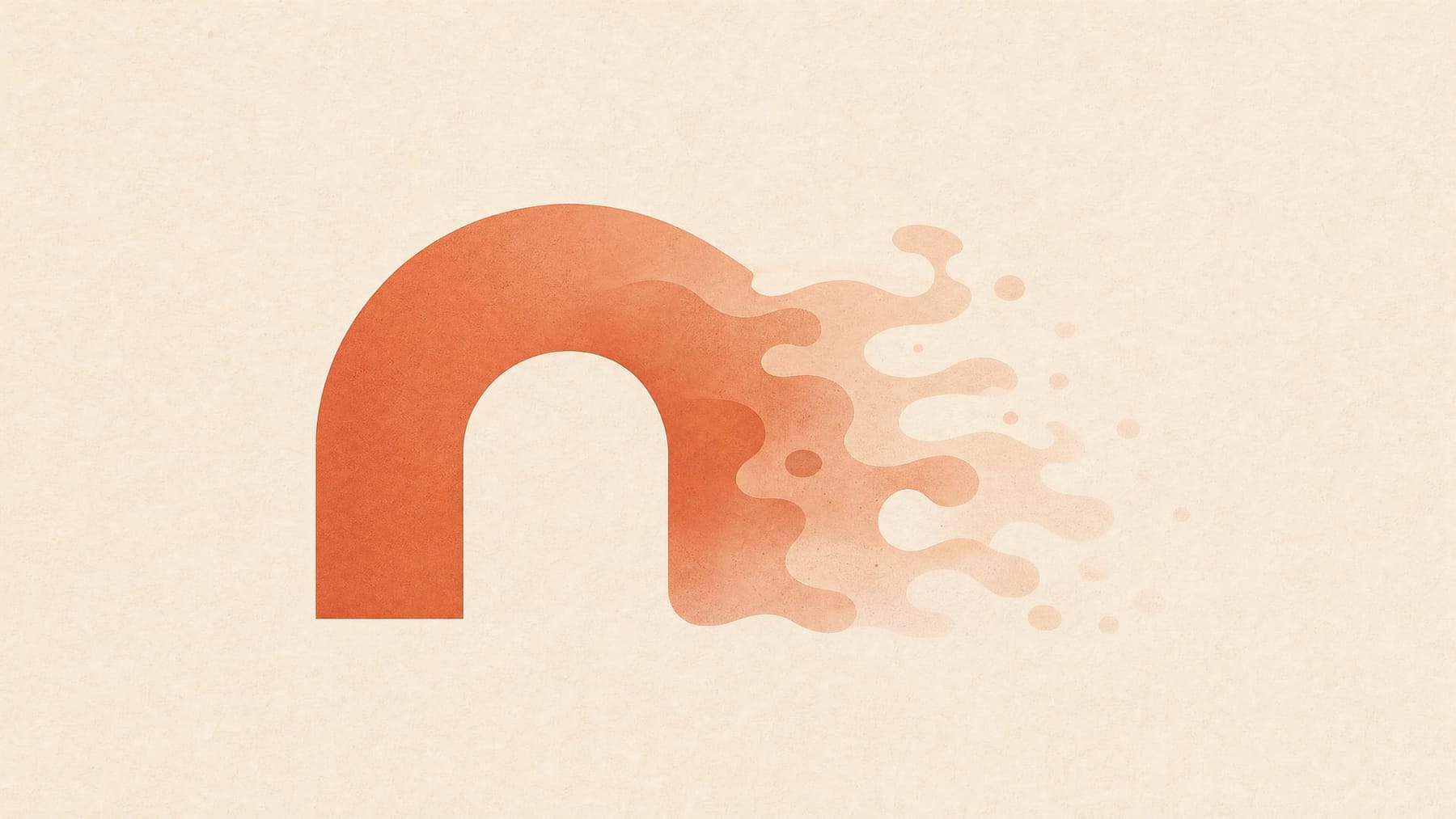
The “low-ink” look. Type designed to appear as though the ink is running out, with letterforms fading, breaking up and dissolving as if mid-print. The effect was a defining feature of recent typeface campaigns and has shaped brand marks that appear to shift or dance as the colour drains. It carries a scrappy, photocopier-and-scanner-bed imperfection that reads as raw and human.
Blotchy and melting wordmarks. These marks look slightly molten: soft, swollen, imperfect, as if the letterforms were pressed in warm wax rather than cut in steel. The most-cited reference point is a certain slightly-melted wordmark that has held firm in fashion since 2019 and quietly spawned a hundred imitators.
Fluid and variable forms. Here the logo is designed as something that shifts, blurs and re-forms across contexts instead of one fixed artwork. It behaves less like a stamp and more like a living substance. This is a cousin of kinetic logo design, but where kinetic marks move in time, these blur in form. They can sit perfectly still and still feel unstable.
What the Blur Signals
A trend this widespread always says something about the culture around it. The blur carries several signals at once.
A revolt against perfection, and against AI. As AI generates an endless supply of flawless, hard-edged, frictionless marks, flawlessness has quietly lost its value. When perfect is free and infinite, imperfect becomes the scarce signal of a human hand. The smudge, the dissolve and the blotch are difficult to fake convincingly and read instantly as made rather than generated, the same authenticity instinct driving the return to custom illustration. The blur is a brand insisting: a person made this.
Softness as emotional warmth. Hard edges read as corporate, permanent and a little cold. Soft, fluid forms read as approachable and alive. In an anxious era, a brand that looks like it can bend rather than break carries an emotional reassurance that a rigid mark cannot.
Confidence through impermanence. This paradox is worth savoring. Only a brand secure in its recognition can afford to let its mark blur, to say “you’ll know us even when we’re indistinct.” A dissolving logo is, oddly, a flex: it signals a brand so established it can play with its own form. That is also the first clue about who should not do it.
Who Should Go Blurry, and Who Absolutely Shouldn’t
Enthusiasm needs a cold compress at this point. The blur is right for some brands and quietly disastrous for others.
It works for you if your brand is in fashion, culture, music, the arts, or any creative field where expressiveness is the value; if you already have strong recognition you can afford to play with; if your audience prizes novelty and human texture over reassurance. For these brands, a fluid mark feels current, confident and alive.
It’s wrong for you if your brand sells trust, precision or permanence: finance, healthcare, law, engineering, anything industrial or B2B. A blurry mark on a precision manufacturer contradicts the entire promise, because the buyer reads instability where they need to read reliability. It’s also wrong if you lack established recognition, since a blurred logo only works when people already know the clear version underneath. Blur an unknown mark and you won’t look confident. You’ll look like you couldn’t afford a sharp file.
And one caution applies to everyone: a logo must still function. It has to survive being shrunk to a favicon, embroidered, engraved, faxed in a tender document. A blur effect that turns to mud at sixteen pixels, or vanishes in single-colour print, has failed the basic job of a logo however current it looks on a moodboard. As we keep reminding clients while choosing the right type of logo, the question is always “does it work everywhere it has to,” and only then “does it look good.”
How to Borrow the Trend Without Regret
If the blur genuinely fits your brand, use it with discipline:
- Keep a sharp version. Have a clean, functional master that your blurred treatment is built on. The blur expresses a solid mark and does not replace it; you’ll need the crisp version for the favicon, the embroidery and the small print.
- Blur with intent, not as a filter. A logo smudged in Photoshop at the last minute looks like an accident. A mark designed to be fluid looks like a decision, and the difference is visible.
- Check it survives the real world. Test it tiny, single-colour, embroidered, engraved. If it dies there, you have a graphic and no logo.
- Ask if it’s true to you. This is the hardest question and the most important: does instability express your brand’s actual character, or are you borrowing someone else’s? A trend worn as a costume always shows.
The blur is a fascinating signal of where design is heading: away from cold perfection, toward warmth, humanity and a confident comfort with impermanence. For the right brand, it’s genuinely current. But a logo outlives almost every trend that tempts it, which is exactly why it’s the one element where “is this us?” must always beat “is this now?”
Tempted to soften your mark but unsure if it fits, or if it’ll still work at favicon size? Get in touch and we’ll tell you honestly whether the blur belongs to your brand or just to this season.
FAQ
Q: Why are logos getting blurry in 2026?
Because flawless, hard-edged perfection lost its value once AI made it free and infinite. Blurry, fluid and “low-ink” logos signal a human hand, emotional warmth, and a confident comfort with impermanence: a deliberate revolt against cold corporate precision.
Q: What is the “low-ink” logo trend?
A style where type is designed to look as though the printer is running out of ink, with letterforms fading, breaking up or dissolving mid-word. It carries a scrappy, human, photocopier-era imperfection that reads as raw and authentic rather than machine-perfect.
Q: Should my business use a blurry or fluid logo?
Only if your brand is in a creative or cultural field where expressiveness is the value, and you already have strong recognition to play with. For brands selling trust, precision or permanence (finance, healthcare, engineering), a blurry mark contradicts the promise and is best avoided.
Q: Do blurry logos still work at small sizes?
Often not, which is the trend’s biggest risk. A logo must survive being a favicon, embroidered, engraved or printed in single colour. A blur effect that turns to mud when shrunk has failed the basic job of a logo. Always keep a sharp, functional master version.
Q: Is the blurry logo trend just a fad?
It may well pass, which is precisely why caution matters: a logo outlives almost every trend. The underlying signals (warmth, humanity, anti-AI authenticity) are durable, but the specific blur aesthetic should only be adopted if it genuinely fits your brand’s character, not because it’s current.
Sources
- It’s Nice That, Forward-thinking graphic trends 2026 (low-ink look, blotchy/melting logos, variable forms): https://www.itsnicethat.com/features/forward-thinking-graphic-trends-2026-graphic-design-120126
- Sessions College, Hottest Graphic Design Trends (human counter-movement to AI): https://www.sessions.edu/notes-on-design/discover-the-hottest-graphic-design-trends/
FAQ
Questions people ask
Why are logos getting blurry in 2026?
Because flawless perfection lost value once AI made it free and infinite. Blurry, fluid and low-ink logos signal a human hand, emotional warmth, and confident comfort with impermanence: a revolt against cold corporate precision.
What is the low-ink logo trend?
A style where type is designed to look as though the printer is running out of ink, with letterforms fading, breaking up or dissolving mid-word, carrying a scrappy, human, photocopier-era imperfection that reads as authentic.
Should my business use a blurry or fluid logo?
Only if your brand is in a creative field where expressiveness is the value and you already have strong recognition. For brands selling trust, precision or permanence (finance, healthcare, engineering), a blurry mark contradicts the promise.
Do blurry logos still work at small sizes?
Often not, which is the biggest risk. A logo must survive as a favicon, embroidered, engraved or in single colour. A blur that turns to mud when shrunk has failed the basic job. Always keep a sharp, functional master.
Is the blurry logo trend just a fad?
It may pass, which is why caution matters: a logo outlives most trends. The underlying signals (warmth, humanity, anti-AI authenticity) are durable, but the blur aesthetic should only be adopted if it genuinely fits your brand.
Need a logo that holds up in print, on screen and in ten years?
Fixed prices, 4 concepts, vector files and a money-back guarantee on the first concepts.
Related articles
All articles Brand
BrandHow to Launch a Rebrand Without Losing Your Customers
The files are delivered, and now comes the part that decides everything: the switch. The 215-asset inventory, the bridge period, the inside-out sequence, and the 30-day scoreboard.
· 4 min read
 Brand
BrandThe DIY Brand Audit: Score Your Brand in One Afternoon
Before spending a euro on design, spend an afternoon on diagnosis. The exact 5-test brand audit we run professionally, simplified for coffee, honesty, and one stranger.
· 4 min read
 Brand
BrandFrom Startup Brand to Company Brand: Rebranding After Traction
The scrappy identity that won your first hundred customers is costing you the next thousand. When to rebrand a startup, what actually changes, and the founder’s playbook.
· 4 min read